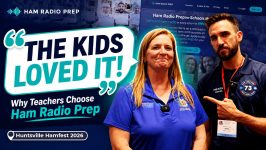
What happens when students study radio science, talk with an astronaut, earn an FCC license, and begin teaching one another? For educator Jackie, KC9LEH, the result was a thriving school radio club—and students who genuinely enjoyed learning with Ham Radio Prep for Schools.
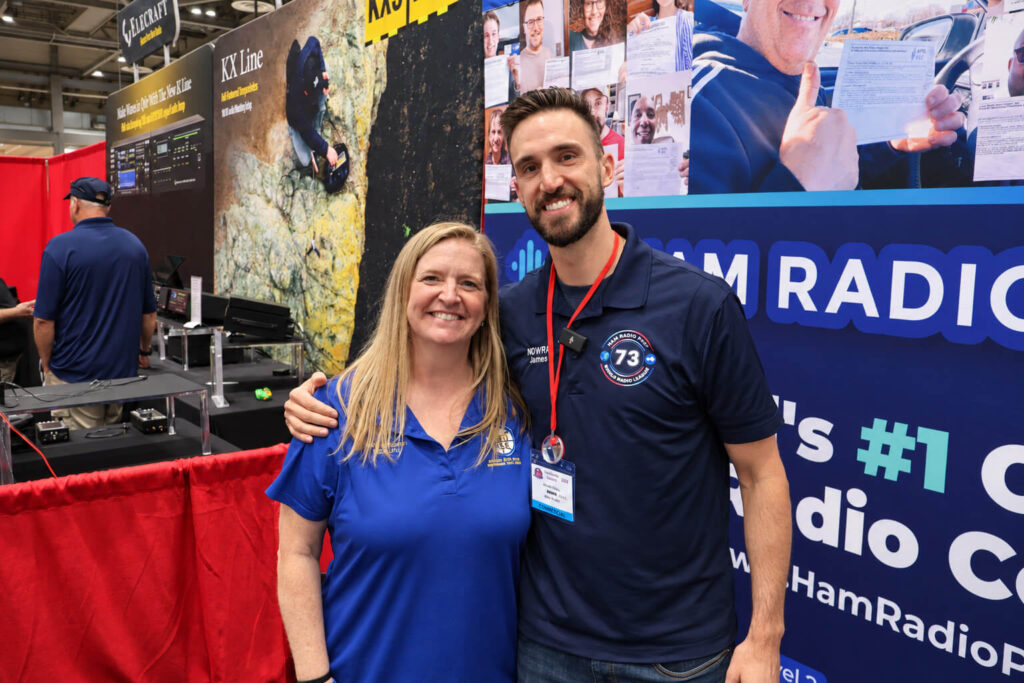
Ham Radio Prep’s James, N0WRL, met Jackie at Huntsville Hamfest 2026 after hearing that she had used the free classroom program. Her experience shows how amateur radio can turn science, technology, engineering, and math into something students can hear, build, test, and use.
According to Jackie, 50 fourth graders earned their amateur radio licenses during her first project in 2011. A later junior-high group added 35 more newly licensed students. By the time of the interview, four eighth graders had already upgraded to General and were preparing for Amateur Extra while helping teach sixth graders.
“The kids love it.” Jackie, KC9LEH
What Is Ham Radio Prep for Schools?
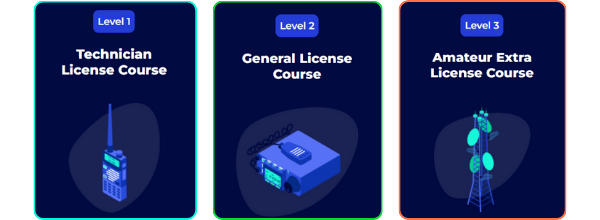
Ham Radio Prep for Schools provides accepted educators with free classroom access to the 24-lesson Technician License Course. Students learn through videos, written lessons, quizzes, and practice tests that can be accessed on the web or a mobile device.
The program is designed for more than a conventional K–12 classroom. Current eligibility includes teachers and instructors affiliated with schools, homeschool co-ops, youth education programs, STEM clubs, maker spaces, colleges, career and technical education programs, and other recognized educational organizations.
-
- Educators submit a short application.
- Accepted applicants receive free classroom access.
- Students work through the Technician course and practice exams.
- Educators help students arrange an FCC license exam when they are ready.
- Teachers share feedback that can improve the program for future classrooms.

Why Jackie’s Students Liked the Course
When James asked what worked for her students, Jackie pointed to three practical strengths: approachable instructors, content that was easy to follow, and practice tests that helped students prepare for the real exam.
She also highlighted the visual nature of the instruction. Video and graphics gave students more than a page of facts to memorize. The format helped make unfamiliar ideas—such as frequency, wavelength, circuits, antennas, and operating rules—feel less intimidating.
Short Lessons Create Manageable Progress
A license curriculum can look large when students first encounter the question pool. Dividing it into focused lessons, quizzes, and repeated practice gives a class visible milestones. Teachers can pause for a demonstration, review a difficult idea, or let students repeat material at their own pace.
Practice Tests Build Exam Confidence
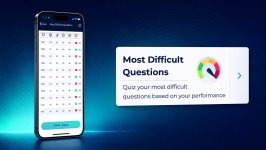
Practice exams do more than predict a score. They help students become familiar with the question style, identify weak topics, and see improvement over time. That feedback can turn exam preparation into a concrete, achievable project.
A Real License Gives the Work a Purpose
The entry-level Technician license is an official FCC amateur radio credential and is valid for ten years. Students are not completing a simulated classroom exercise: after passing the exam and receiving a call sign, they can use their privileges under the amateur radio rules.
An ARISS Contact Started the Project
Jackie’s school journey began with an Amateur Radio on the International Space Station contact. An ARISS educational contact is an approximately ten-minute amateur radio conversation between students and an astronaut or cosmonaut aboard the International Space Station. Schools build months of educational activities around that brief radio window.
Jackie said her preparation period lasted about four to six months. For her project, she decided that students who would speak with the astronaut should first earn their ham radio licenses. That was Jackie’s classroom requirement; ARISS does not require every participating student to hold a license.
The first contact involved fourth graders. A later contact centered on sixth grade and reached students from third through eighth grade. The astronaut conversation created excitement, while exam preparation gave that excitement a longer educational path.
From 85 New Licenses to Student Mentors
Jackie reported two remarkable licensing results:
-
- 50 fourth graders earned licenses during the first project in 2011.
- 35 junior-high students earned licenses during the later project.
The next stage may be even more valuable. Jackie said four eighth graders had already earned General-class licenses and were studying for Amateur Extra. Those experienced students were teaching her sixth graders.
Peer teaching changes the classroom dynamic. Older students must explain technical ideas clearly, model responsible operating, and answer questions. Younger students see a near-age role model who has already achieved the goal. The license becomes part of a continuing school culture instead of a one-time test.
Why Ham Radio Works for STEM Education
Amateur radio connects classroom concepts to observable results. Students can calculate wavelength and then build an antenna. They can study propagation and then compare signals at different times. They can learn circuits and soldering, troubleshoot a station, send a message, or make a voice contact.
-
- Science: radio waves, the ionosphere, space weather, and propagation
- Technology: radios, digital modes, satellites, and communication systems
- Engineering: antennas, circuits, soldering, measurement, and troubleshooting
- Math: frequency, wavelength, electrical relationships, and unit conversion
- Communication: call signs, concise exchanges, listening, and on-air etiquette
- Career exploration: electronics, RF engineering, public safety, and commercial space
Jackie described students learning to solder and parents being surprised that junior-high students could handle the skill. Her point was simple: students remember experiences that let them do something, not only read about it.
How to Start a School Ham Radio Program
-
- Choose a motivating goal. An ARISS proposal, school radio club, emergency communications project, electronics build, or licensing day can give students a reason to participate.
- Apply for Ham Radio Prep for Schools. Confirm that your school, club, co-op, maker space, or youth program meets the current eligibility requirements.
- Set a realistic schedule. Combine online lessons with teacher-led review, demonstrations, and time for students to practice.
- Find local amateur radio support. A radio club, licensed parent, or volunteer examiner team may help with demonstrations, equipment, mentoring, and exam logistics.
- Add hands-on activities. Build a simple antenna, practice phonetics, measure components, receive a satellite pass, or learn safe soldering.
- Prepare for testing. Use quiz results and practice exams to identify when students are ready, then arrange an accredited examination session.
- Plan what comes after the license. Schedule supervised operating, club meetings, projects, and upgrade study so students can use what they learned.
What Educators Should Know Before Starting
The course provides a structured route to the Technician exam, but a successful school program still benefits from an adult plan for equipment, station safety, student privacy, exam registration, and supervised operating. Follow school policies and current FCC rules, and use qualified local volunteers when additional technical help is needed.
An ARISS contact is an outstanding goal, but it is not required to teach ham radio. A local contact, school club net, electronics project, or first successful license exam can be just as meaningful. Start with the opportunity your students and school can support, then let their curiosity shape the next project.
The Teacher Takeaway
Jackie’s story is not only about impressive exam totals. It is about a program that continued after the first event. Students advanced through license classes, taught younger classmates, built practical skills, and helped create a school community around radio and STEM.
For educators wondering whether young students can learn amateur radio, her experience provides a clear answer: give them understandable instruction, a real goal, opportunities to practice, and something meaningful to do with the knowledge.