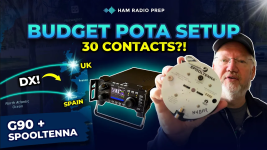
In this article, we’re doing something a little different. Instead of covering theory, we’re taking brand-new equipment into the field to see how it performs during an actual Parks on the Air (POTA) activation.
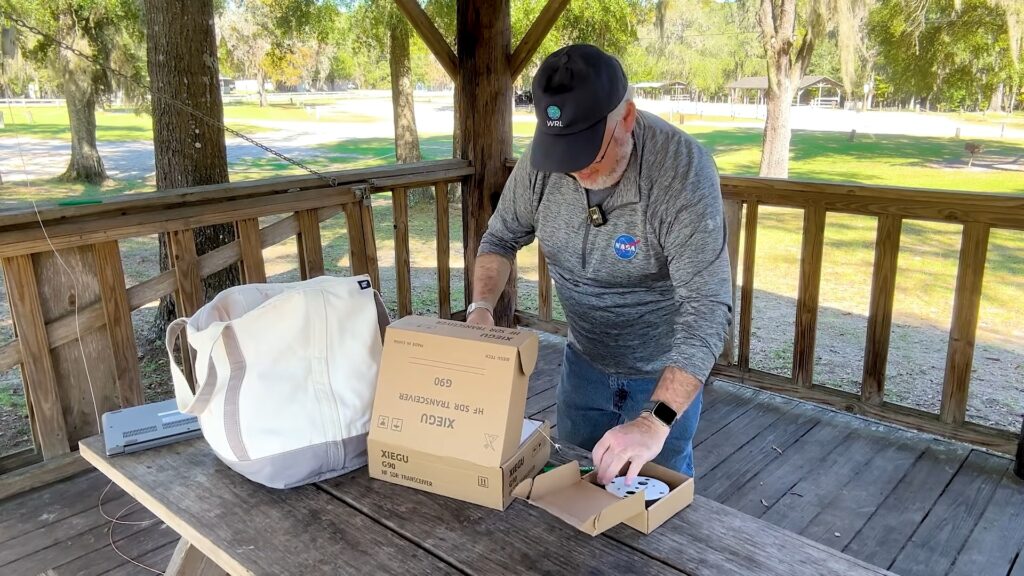
Testing equipment in real operating conditions is one of the best ways to learn its strengths, identify areas for improvement, and decide whether it’s a good fit for your own portable setup.
New Equipment for the Field
Two new pieces of equipment were selected for this activation:
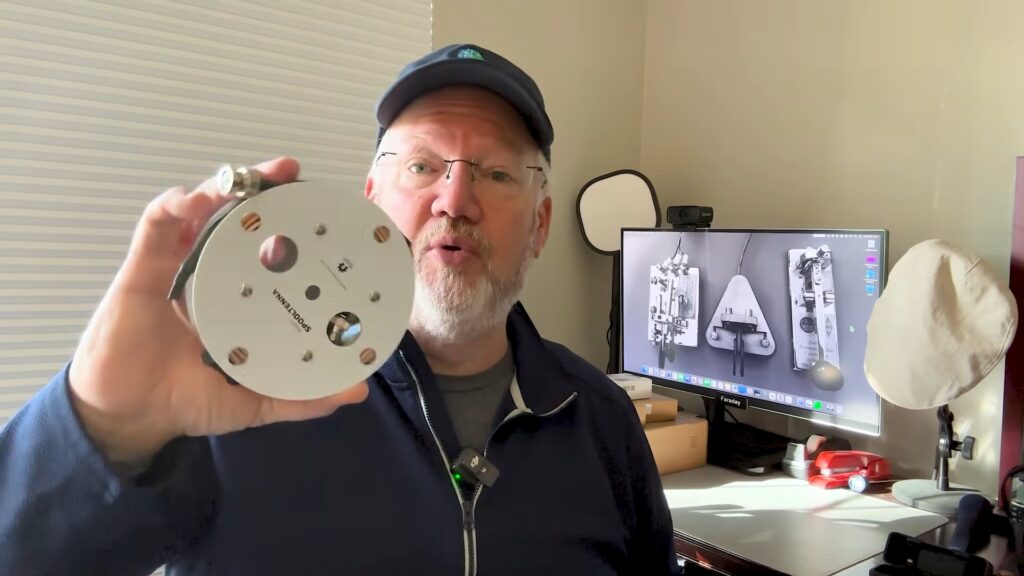
- Spooltenna Deluxe Kit
– an end-fed half-wave antenna system covering 10 through 40 meters. The kit includes a spool with 25 feet of coax, an integrated choke, adapters, and a second spool containing the antenna wire. It even includes a simple method of using a pen through the spool to make deployment easier.
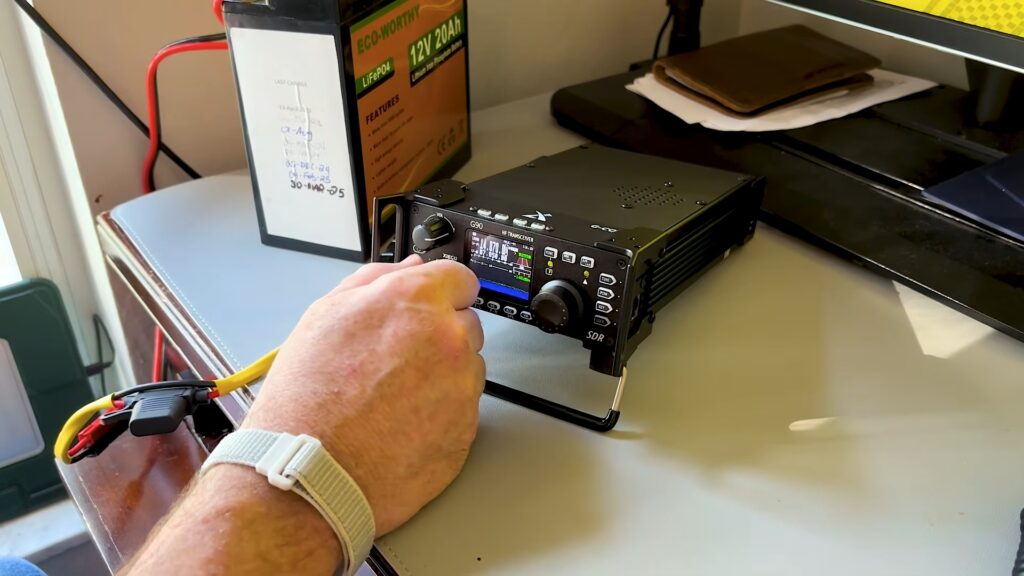
- Xiegu G90
– a compact 20-watt HF transceiver that has become a popular recommendation among POTA operators. The radio comes with a microphone, power cable with Anderson Powerpole connectors, data cables, and optional accessories for portable operation.
One interesting feature of the Spooltenna is that each antenna is individually tested before shipping. The included analysis sheet shows the measured SWR performance on each supported amateur band, giving you confidence that the antenna is performing as expected before you even leave home.
Getting Familiar with the Xiegu G90
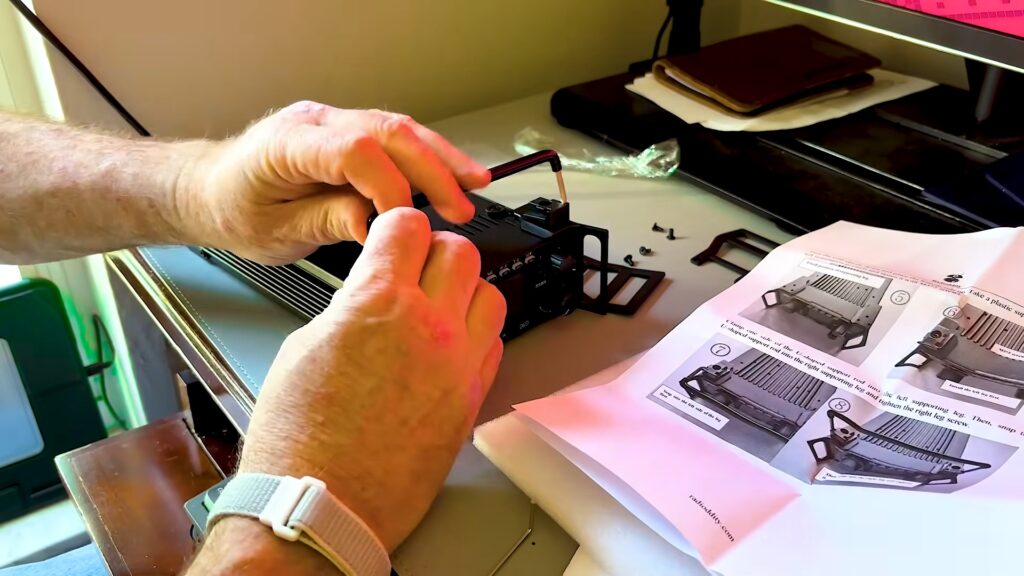
Before heading to the park, it’s always a good idea to become familiar with a new radio. Even if you don’t perform a complete setup, verify that the radio powers on, that the controls operate correctly, and that you understand the available connections.
The Xiegu G90 includes connections for:
- Power input using Anderson Powerpole connectors
- Microphone
- CW key
- Computer control and data connections
- Ground connection
The radio is lightweight and compact enough to fit easily into a portable go kit while still providing up to 20 watts of output power, making it an attractive option for POTA activations.
⚠️Always Test Before Leaving Home⚠️
One of the most valuable habits for portable operators is to test new equipment before heading into the field.
Before leaving home, the G90 was connected to an existing LiFePO4 battery using Anderson Powerpole connectors. A quick power-on test confirmed:
- The radio powered up correctly.
- Controls and tuning worked normally.
- The antenna adapter required for the Spooltenna was available.
Spending just a few minutes verifying basic operation at home can prevent a frustrating trip to the park.
Setting Up at the Park
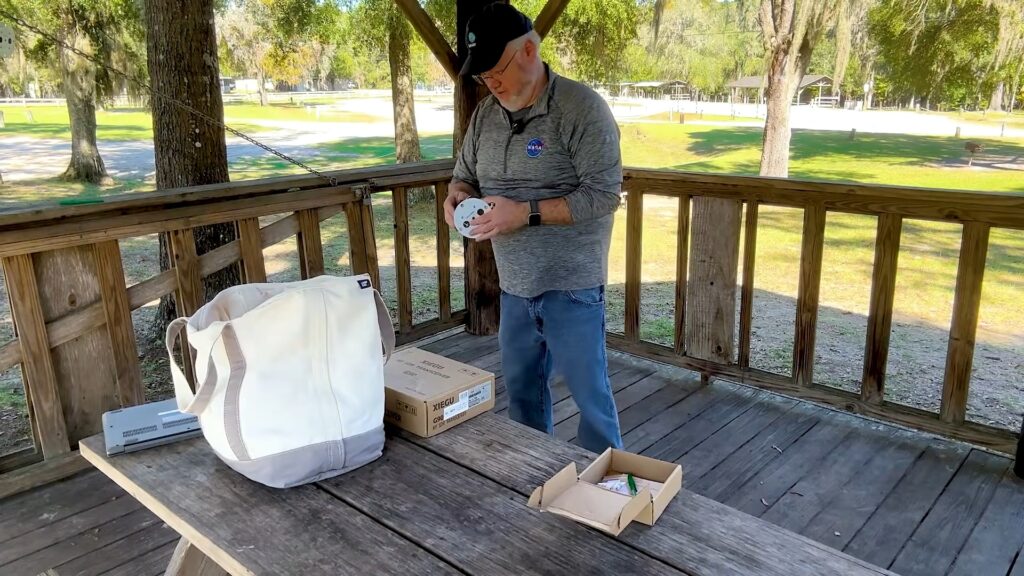
For this field test, the activation took place at Gilchrist Blue Springs State Park in Florida.
Before deploying the antenna, the surroundings were evaluated. Nearby power lines were identified, and the antenna was oriented as perpendicular to them as practically possible to help reduce unwanted interference.
The Spooltenna proved to be very simple to deploy:
- Attach one end of the antenna.
- Walk out the wire from the spool.
- Raise the far end into a tree.
- Connect the coax to the radio using the appropriate adapter.
The integrated choke and compact storage system made setup fast and convenient, especially for a first-time deployment.
On-the-Air Performance
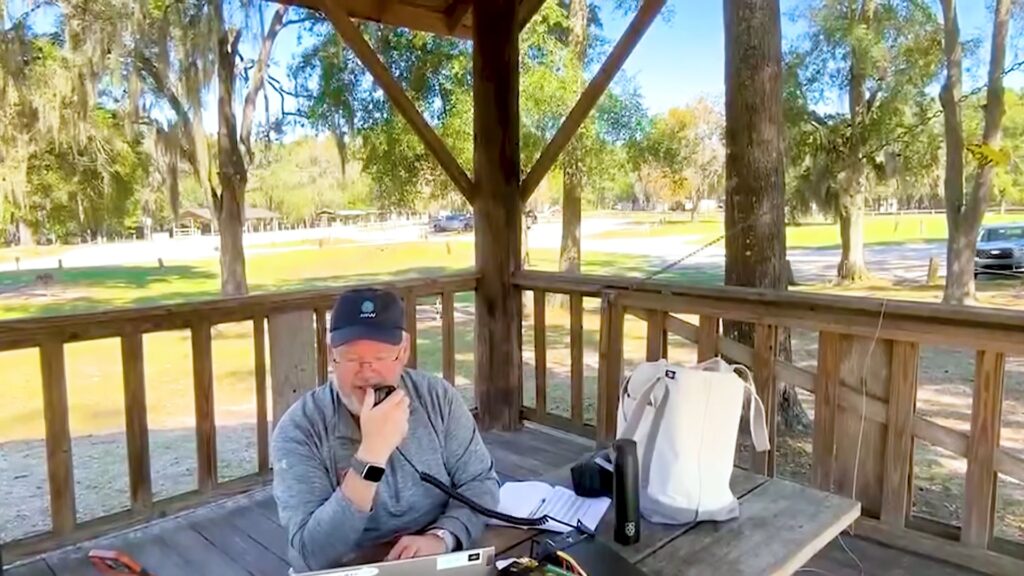
Once everything was connected, it was time to call CQ POTA and begin making contacts.
The overall operating experience was very positive:
- The radio transmitted cleanly.
- Received audio reports were consistently excellent.
- The antenna performed well across multiple bands.
- Thirty contacts were completed during the activation.
Logging the Activation with World Radio League
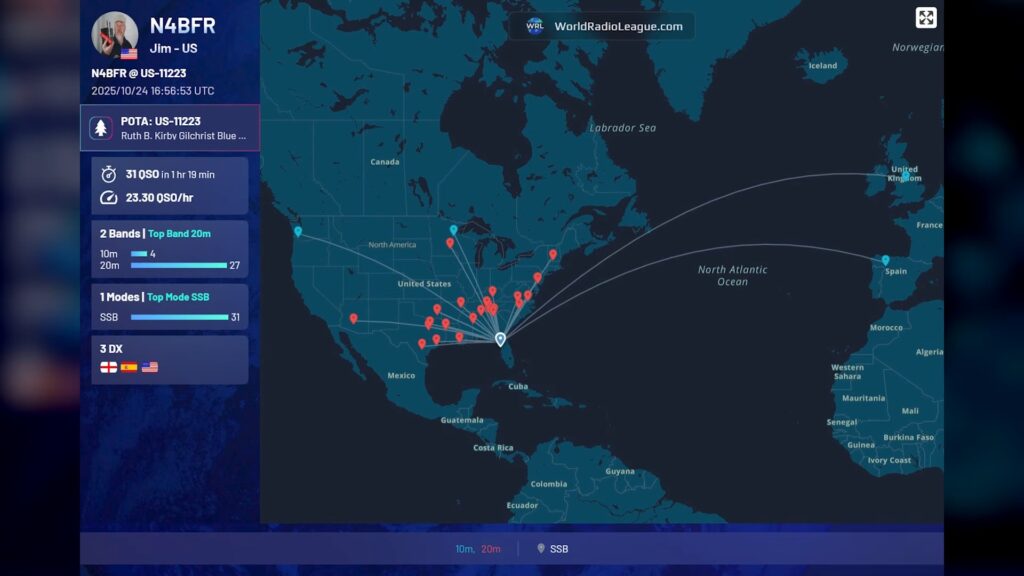
Jim used World Radio League to log all 30 contacts and view them on the contact map. The map showed stations across the United States, plus DX contacts in Spain and the United Kingdom, demonstrating the reach of the G90 and Spooltenna.
Lessons Learned
Every activation is an opportunity to improve your portable station. During this outing, several useful notes were made for future trips:
- Configure computer control ahead of time.
Rig control settings and drivers should be tested before arriving at the park.
- Watch for RF interference.
Some RF noise appeared on the 10-meter band when the rig control cable was connected. Ferrite toroids can often help reduce this type of interference.
- Inspect power cables regularly.
A slightly worn battery cable was discovered during the outing, providing a reminder that routine inspection can prevent future problems.
Final Thoughts
Overall, both the Xiegu G90 and the Spooltenna proved to be excellent additions to a portable POTA station. The radio delivered solid transmit and receive performance, while the antenna was quick to deploy and produced impressive results during the activation. Perhaps the biggest takeaway from this activation is that field testing is invaluable. Even when new equipment performs well, you’ll often discover small improvements you can make before your next trip. Over time, these refinements make your portable station faster to deploy, more reliable, and more enjoyable to use. Whether you’re trying a new antenna, upgrading your radio, or simply refining your go kit, taking the equipment into the field is the best way to learn what works for your style of portable operating.