🚨 Why Are We Even Asking This?
With innovations like Starlink, satellite internet, and push-to-talk over LTE becoming mainstream, it’s fair to wonder:
“Is ham radio still relevant?”
Absolutely. In fact, recent global outages, like the one experienced by Starlink, prove just how vulnerable centralized communication infrastructures can be.
When the grid goes down, ham radio stays up. Here’s why.
⚡ Ham Radio vs Starlink: It’s Not Even the Same Game
Let’s make something clear — Starlink is not the enemy. It’s a powerful service that brings high-speed internet to remote areas. But Starlink is:
- Owned by a private company.
- Dependent on satellites, infrastructure, and backend software.
- Vulnerable to cyberattacks, software failures, or corporate restrictions.
On the other hand, ham radio is:
- Decentralized
- Owned by YOU
- Free to use (no subscriptions!)
- Globally capable using just a radio and antenna.
When you hit the transmit button on your ham radio, the signal goes directly through the atmosphere to another station — no towers, satellites, or paid middlemen.
🆘 Ham Radio: The Backbone of Emergency Comms
When disaster strikes, ham radio operators step in.
📍North Carolina, Hurricane Helene: Cell towers down. Ham operators coordinated relief and supply chains.
🔥 California wildfires: Ham radio supported first responders.
🌪️ Hurricane Maria: Ham operators directed search and rescue.
You can even send emails over radio using Winlink, or get 24/7 NOAA weather alerts without the internet .
“Saying we don’t need ham radio is like saying you don’t need a fire extinguisher because the fire department exists.”
🎓 Ham Radio = Innovation & Education
The FCC’s Part 97 outlines 5 purposes for amateur radio. Only ONE is emergency comms.
The others include:
- Advancement of radio science
- Training of skilled operators
- Education in radio fundamentals
- Promotion of international goodwill
🧠 Did You Know?
- Ham radio experiments laid the groundwork for WiFi and digital networking.
- Apple’s Steve Wozniak (WA6BND), Nobel laureate Joe Taylor (K1JT), and NASA astronauts are licensed hams.
- Programs like ARISS let students talk to astronauts live from the International Space Station.
Ham radio is not just a backup — it’s a launchpad for STEM education and innovation.
🌍 Global Friendships & Cultural Exchange
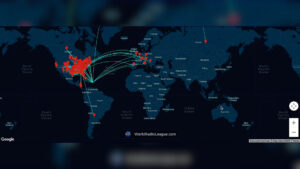
There are over 3 million amateur radio operators worldwide, and many of them have connected across borders through nothing more than airwaves and a shared love for radio.
Whether you’re speaking with a station in Japan, Brazil, or Italy, ham radio fosters international goodwill — a pillar of its charter.
🛡️ We Must Defend Our Spectrum
Recently, a commercial satellite company petitioned the FCC to take over the 70cm amateur radio band.
🚨 Thanks to over 2,000 public comments, the ham radio community made it the most active FCC proceeding that month.
But the fight isn’t over.
Once amateur radio spectrum is taken, it doesn’t come back. That’s why we must stay informed, licensed, and involved.
✅ Get Involved Today
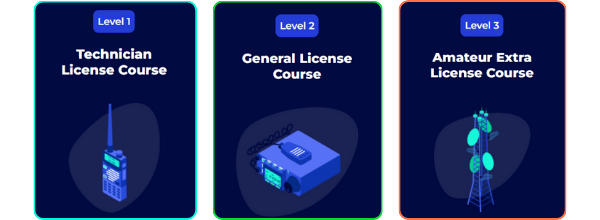
Getting licensed is easier than you think:
- 📘 Free practice tests & study guides
- 🎓 Affordable online courses
- 🛰️ Satellite communication classes
Whether you’re into space comms, emergency prep, or just want to geek out with a wire antenna in the park, ham radio has something for you.
👉 Start your ham radio journey with Ham Radio Prep today!
🔚 Final Thoughts
In a world of overreliance on digital services, ham radio is your last line of defense — a tool for:
- Emergency readiness
- Independent communication
- Technological progress
- Lifelong learning
- Global connection