In this lesson, we’ll cover some of the basics of using your radio to communicate with others. We say “communicate” because while you’ll probably start by talking, there are lots of other ways to communicate on ham radio, like Morse code, digital modes, and more.
Station Identification
The first thing you need to know about communicating on ham radio is that you have to identify yourself with your callsign.
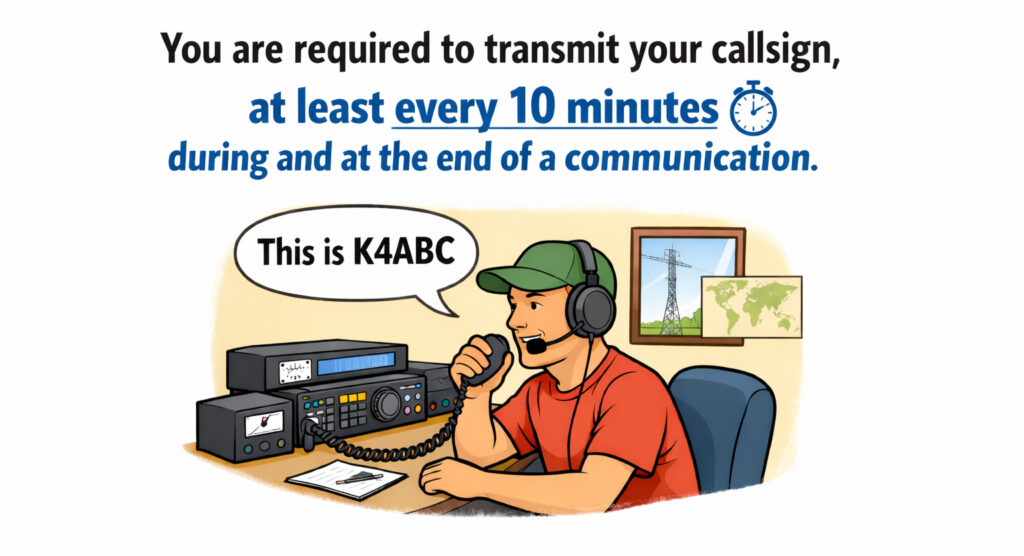
You are required to transmit your callsign at least every 10 minutes during and at the end of a communication.
Sometimes ham radio operators use special callsigns, called tactical callsigns like “Race Headquarters”, especially when participating in community service events like bike races and marathons, to better identify your role, position, or location. Other tactical callsigns could be “Water Stop 1” or “Medical Tent”.
The call sign identification rule does not change when using a tactical callsign – you must still transmit your call sign at least every 10 minutes during and at the end of a communication. Here’s professor Jim N4BFR using a tactical callsign on the air at an Atlanta Track Club public service event:
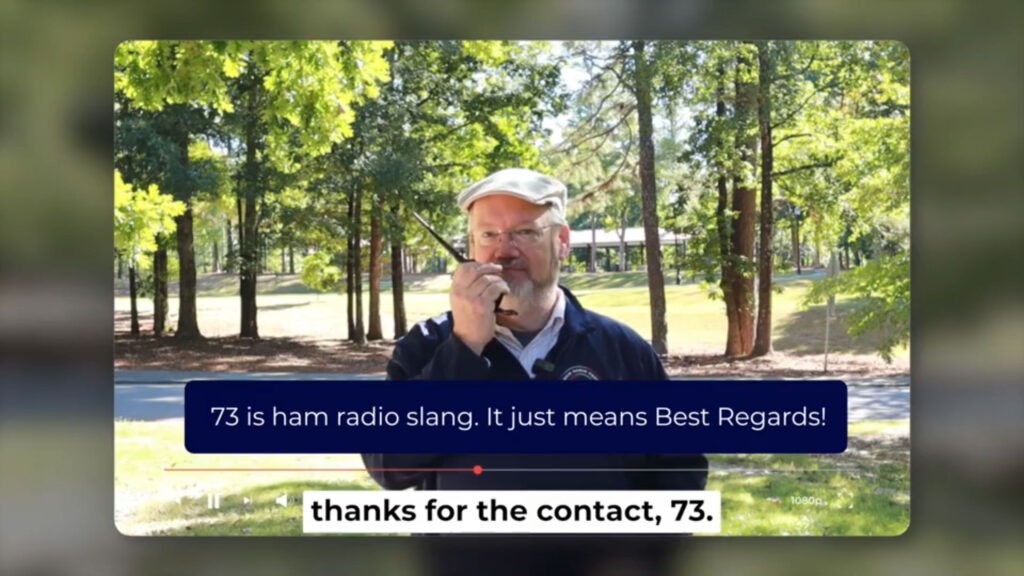
Screenshot from a clip of Jim (N4BFR) from Atlanta Track Club Video, by Ham Radio Prep
You may notice that ham radio operators use the phonetic alphabet when saying our callsigns. Instead of saying the letter “a”, we say “alpha”, or instead of “b”, we say “bravo”.
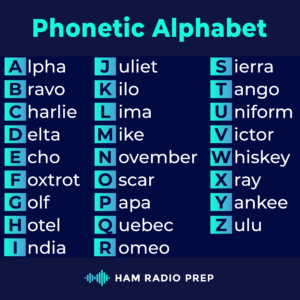
Phonetic Alphabet List, by Ham Radio Prep
Using the phonetic alphabet just makes it easier for the other person to understand your callsign without errors, especially if there is noise or poor conditions. My callsign N0WRL is November Zero Whiskey Romeo Lima using the phonetic alphabet.
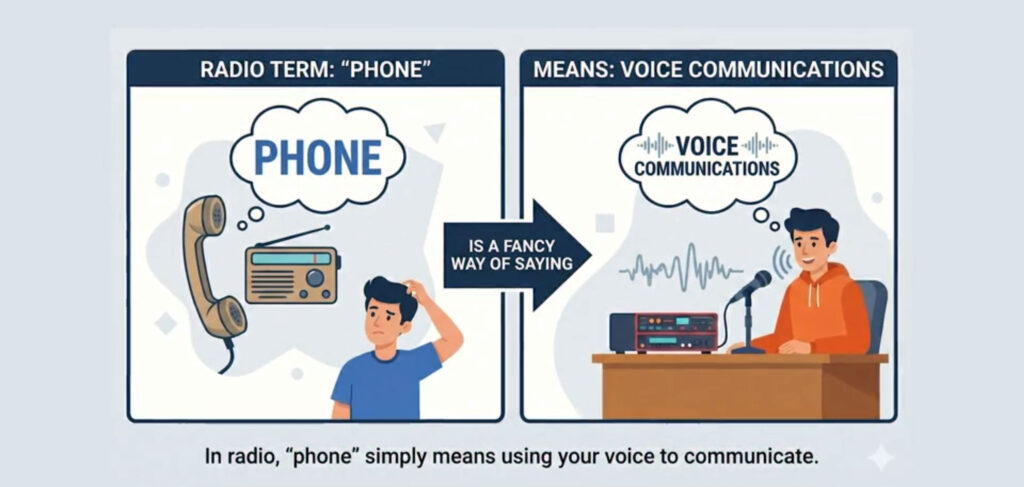
The FCC does NOT require you to use the phonetic alphabet, but it is encouraged when using phone emissions. The word “phone” here is just a fancy way of saying voice communications, just like talking on the phone.
What about other languages? Are you allowed to use other languages for identification when using a phone emission?
No, according to the FCC, you must use English when identifying using a phone emission.
There is one other cool way to identify your station you might be surprised by. The FCC says you send the call sign using a CW or phone emission when transmitting phone signals.
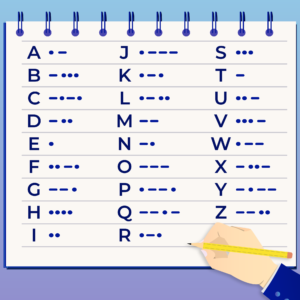
Morse Code List, by Ham Radio Prep
CW stands for “continuous wave”, but it’s more commonly known as Morse code.
If you are traveling, you can add a suffix to your callsign to let people know you are in a different region, since the number in the call sign represents the region.
I might say “N0WRL/W3” if I am in Pennsylvania and don’t want people to think I am in region 0, which is the middle of the country.
There are several ways you can say the stroke character that are all correct. For example:
- KL7CC stroke W3,
- KL7CC slant W3, or,
- KL7CC slash W3
Stroke, slash, or slant all mean the same thing, all these choices are correct.
Even during on-air test transmissions, you are required to identify the transmitting station.
There’s only one exception where you aren’t required to identify with your callsign, which is when transmitting signals to control model craft, such as boats, cars, planes, and drones.
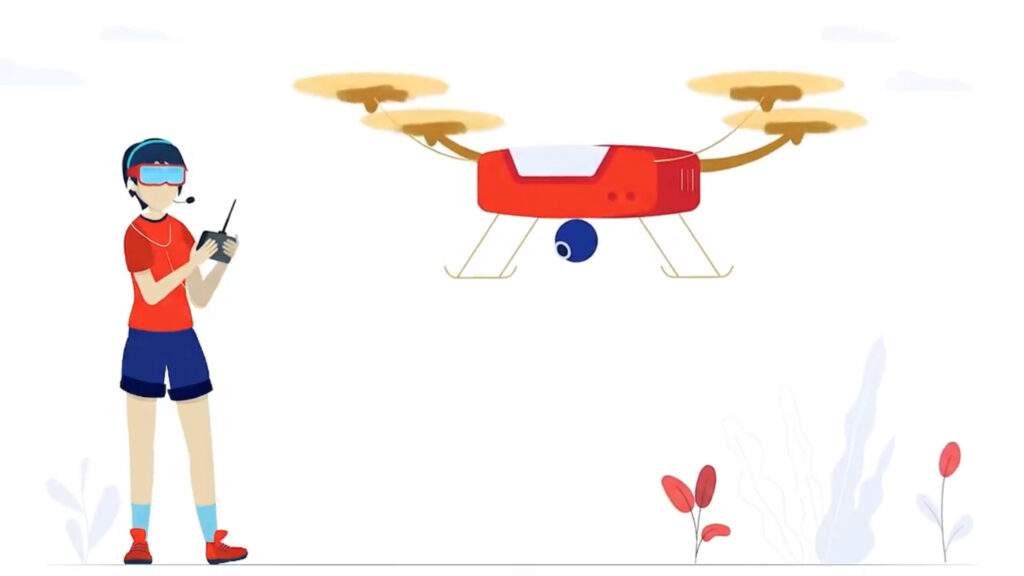
Illustration of operating control model craft, by Ham Radio Prep
Prohibited Communications
Usually, in ham radio, you are prohibited from transmitting any messages that are encoded to obscure their meaning.
But there is another exception here for model craft or space stations.
Only when transmitting control commands to space stations or model craft, you’re allowed to transmit messages that are encoded to obscure their meaning.
Hams can use encoded commands in these special cases so that their model craft or amateur satellites can’t be controlled by other people. If someone else changed the settings of your satellite, it would be really expensive to go up and fix it!
What about cursing over ham radio or using language that is considered obscene? Is that allowed?
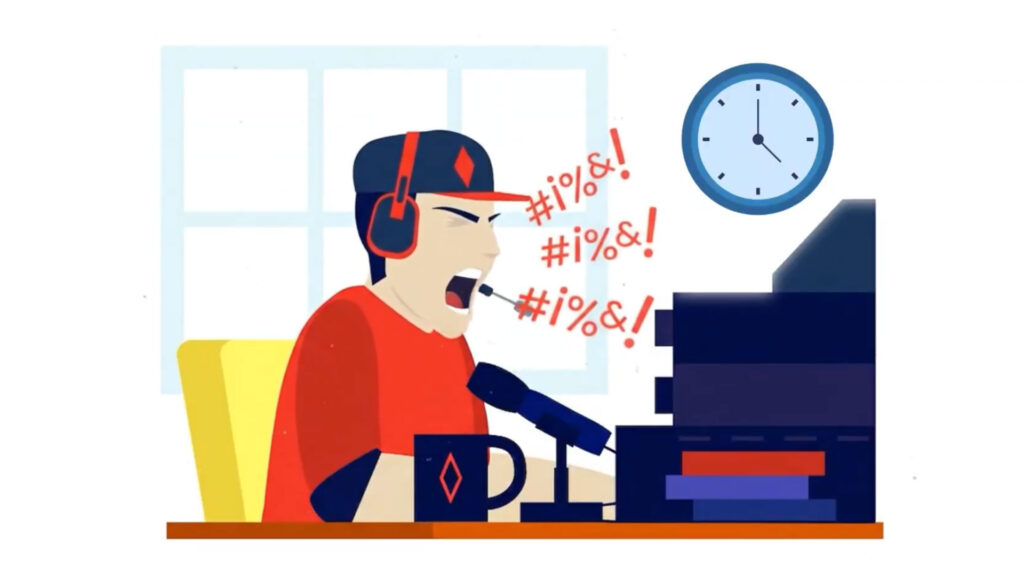
No, any such language is prohibited. Do not get on ham radio and start cursing or using indecent language; it isn’t allowed by the FCC, and it isn’t necessary anyway.
Willful or malicious interference is also prohibited. You cannot get on ham radio and purposefully create interference.
Both of these could result in action by the FCC, including fines and loss of your license.
Broadcasting
Now, let’s talk about the word broadcasting. Broadcasting is not the same as transmitting or talking on ham radio.
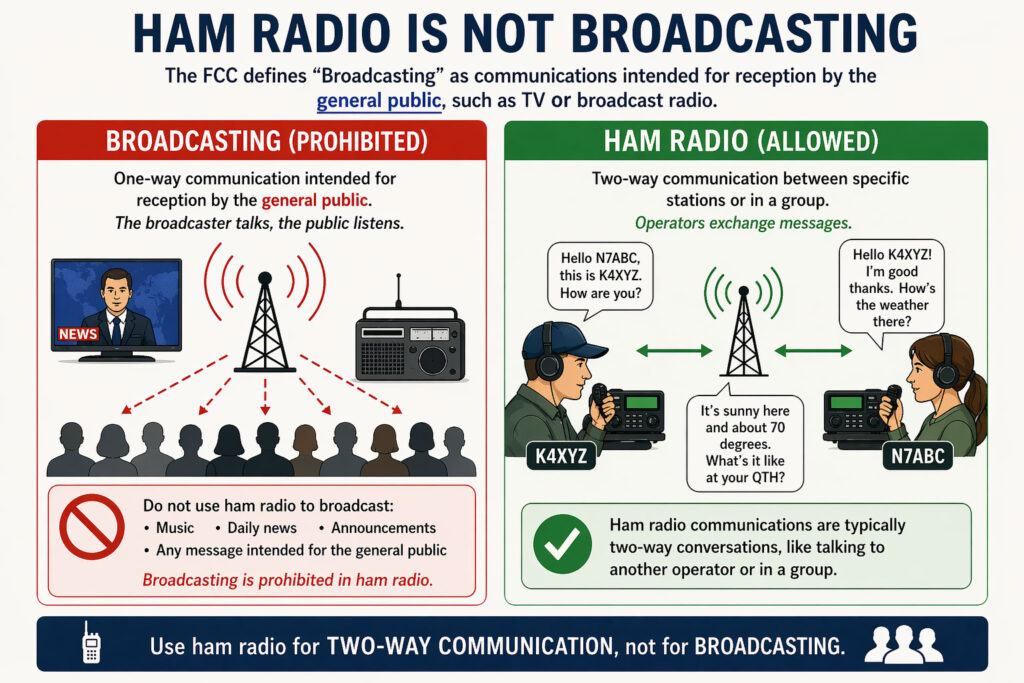
To the FCC, “Broadcasting” means transmissions intended for reception by the general public, like a news anchor on TV or broadcast radio.
It’s not a two-way communication; the broadcaster is talking, and the public is listening.
Broadcasting is prohibited in ham radio. So do not use ham radio to broadcast music or give the daily news. Ham radio communications are typically a two-way conversation, like talking to another operator or in a group.
However, one-way transmissions on ham radio are allowed when announcing upcoming ham radio operating events, International Morse Code Practice, and telecommand or transmission of telemetry, like status updates from a satellite.
There is an exception to the broadcasting rule for emergencies.
When no other means of communication are available, hams may transmit information in support of broadcasting when such communications are directly related to the immediate safety of human life or protection of property. This is only in a true emergency and should be used with caution.
Transmitting music is also prohibited on ham radio. The one exception is that an amateur station can transmit music when incidental to an authorized retransmission of manned spacecraft communications.
If someone is rebroadcasting a NASA transmission to a spacecraft crew, and they wake them up with a song, that’s OK. And yes, there is a ham radio on the international space station, and many astronauts are licensed operators. It’s even possible to make contact with an astronaut on the ISS, which we cover in more detail in our Satellite & Space operations course.
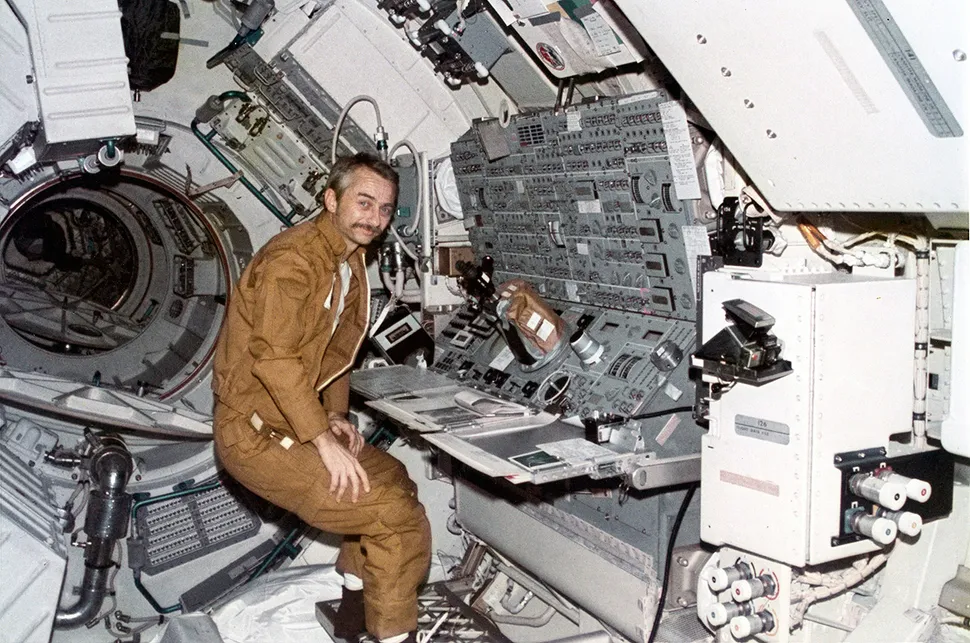
Skylab Space Station (Pilot: Owen Garriott), by NASA
Commercial Restrictions
Amateur radio is not a commercial radio service, so you shouldn’t be using it for business or advertising.
However, it’s okay to let people know when selling amateur radio equipment and not on a regular basis.
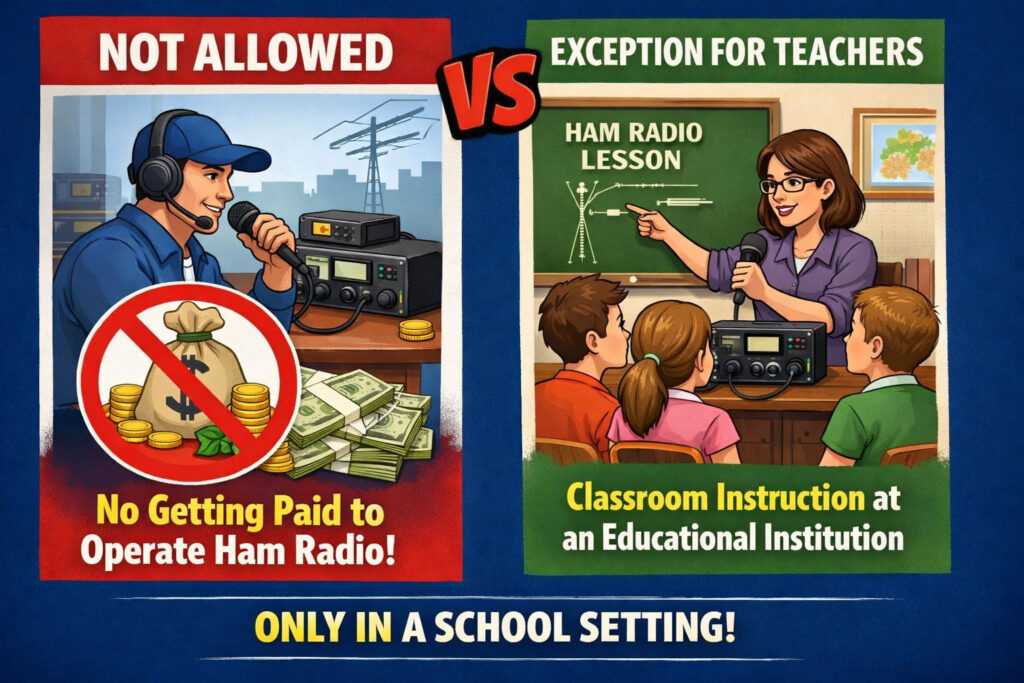
You are not allowed to get paid to operate a ham radio. The only exception here is for teachers, when the communication is a part of classroom instruction at an educational institution.
As long as you aren’t breaking a rule, you can talk about anything you want on ham radio – so go have some fun and make some new friends on the airwaves.
Lesson Recap
Here’s your lesson recap. Remember that you must identify with your call sign in English every ten minutes and at the end of every communication, even when using tactical call signs. Strictly avoid prohibited communications like music, indecent language, and broadcasting to the general public. Finally, while you generally can’t use ham radio for business, you can sell your old gear occasionally, and teachers can use radios in the classroom.
Quick Links: Download the Mobile App| Community Forum | Facebook Group | Reach us at [email protected] | Call Sign Search and Logbook