RF Radiation Safety
Now let’s talk about RF radiation safety – something every ham radio operator needs to understand.
RF stands for radiofrequency, and RF radiation is the energy emitted from ham radio antennas.
Radio signals are a form of energy, but they are not the same as harmful radiation like X-rays. In fact, radio waves are non-ionizing radiation, meaning they do not have enough energy to damage DNA directly.
That’s the key difference between RF radiation and ionizing radiation (or radioactivity): RF radiation does not have sufficient energy to cause chemical changes in cells and damage DNA.
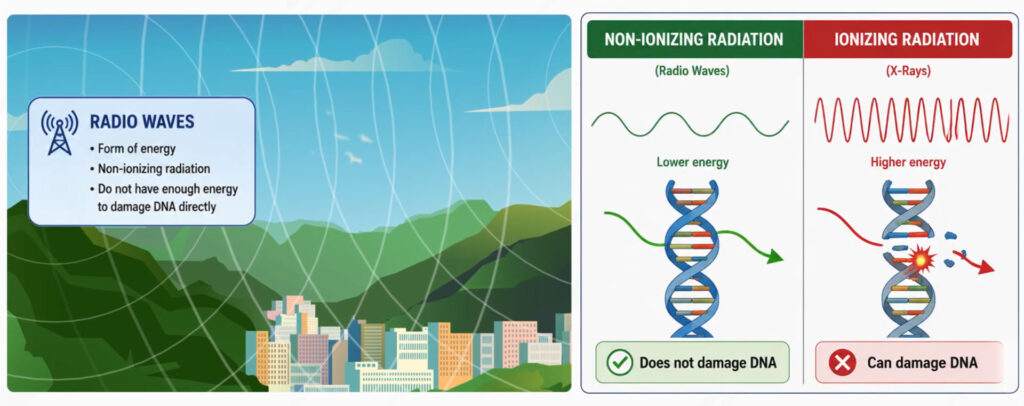
That’s great news for ham radio operators, but it doesn’t mean RF energy is completely harmless.
For example, touching a ham radio antenna while transmitting can result in a painful RF burn to skin. And being exposed to too much RF radiation can cause tissue heating, similar to how a microwave works, but much weaker in most ham setups.
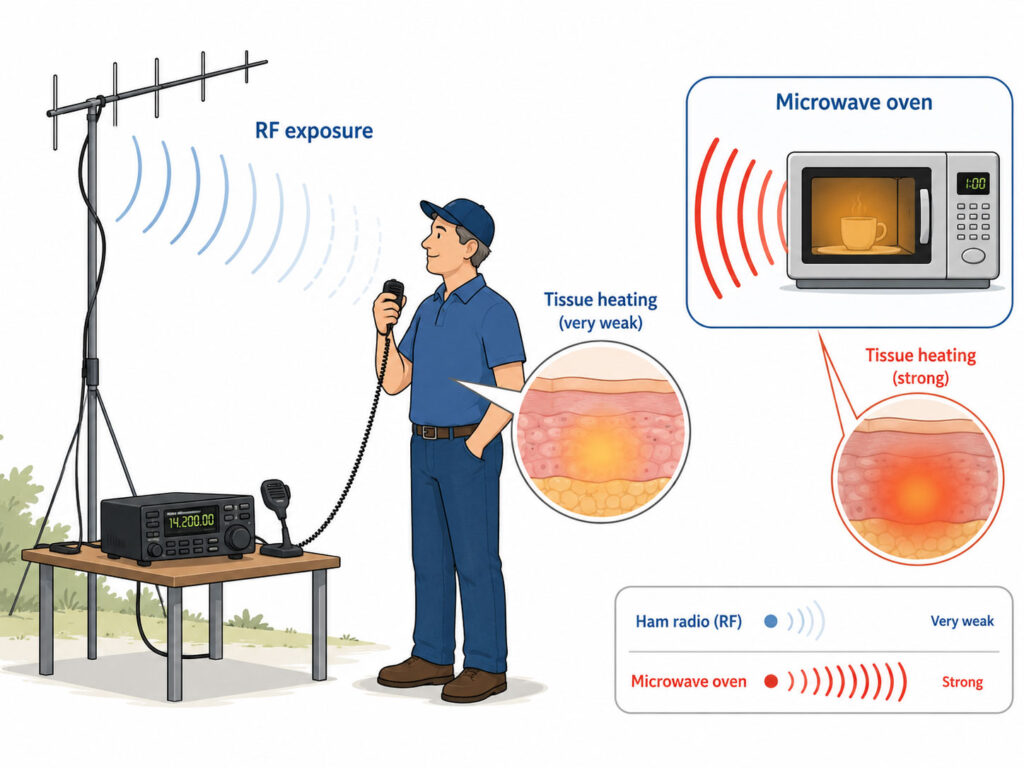
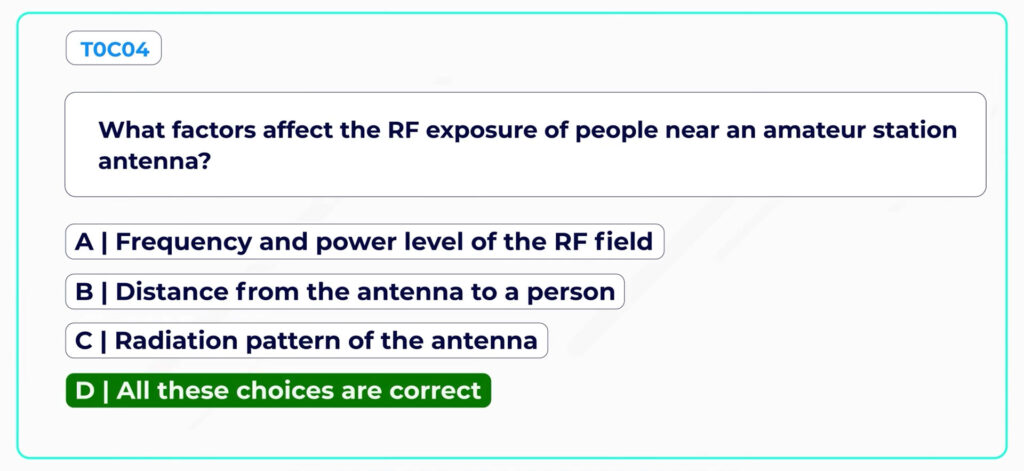
The amount of RF exposure from an amateur radio station depends on:
- The frequency and power level of the RF field
- The distance from the antenna to the person, and
- The radiation pattern of the antenna.
All of these choices are correct when asked what factors affect RF exposure.
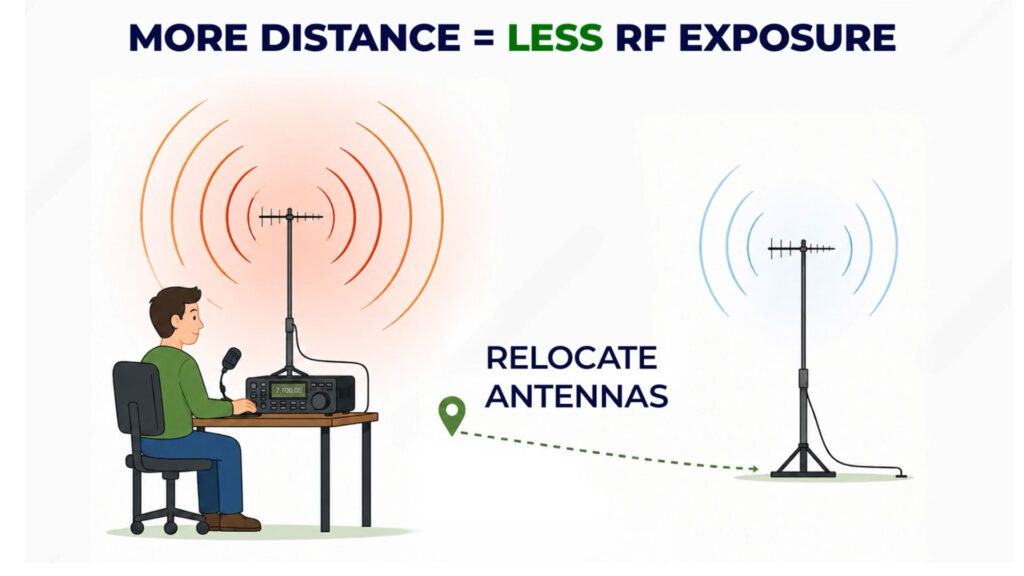
Antenna Placement / Distance
The further the antenna is away from you, the less RF exposure. Therefore, one of the easiest ways to reduce exposure is simple: relocate antennas.
Effect of Frequency
RF exposure limits vary depending on frequency. That’s because the human body absorbs more RF energy at some frequencies than others.
50 MHz has the lowest maximum permissible exposure for RF safety, because this is the frequency that is most absorbed by your body.
Radiation – Duty Cycle
Duty cycle is also a factor. Duty cycle refers to the percentage of time that a transmitter is transmitting.
That’s why duty cycle is important – it affects the average exposure to radiation.
For example, if you reduce your duty cycle from 100 percent to 50 percent, that means your transmitter is only actually transmitting 50% of the time.
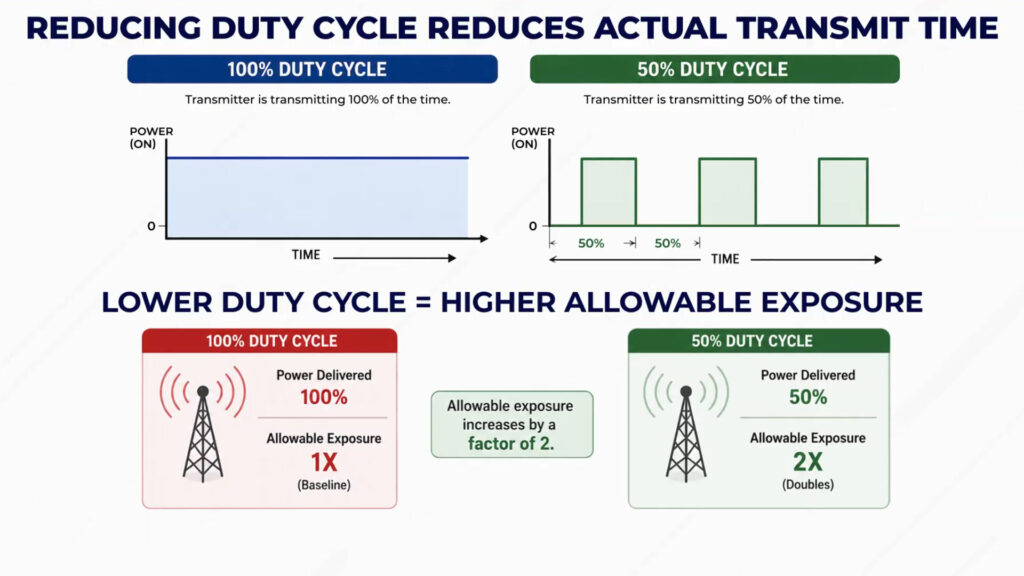
Your allowable exposure effectively doubles, because the power delivered is cut in half. In other words, it increases by a factor of 2.
RF Safety Summary
The responsibility for ensuring that no person is exposed to RF energy above the FCC exposure limits is the station licensee – that means it will be your responsibility as the station licensee to ensure no one is exposed to too much RF energy.
There are several ways to evaluate compliance with FCC RF exposure regulations:
- By calculation based on FCC OET Bulletin 65
- By calculation based on computer modeling, or
- By measurement of field strength using calibrated equipment
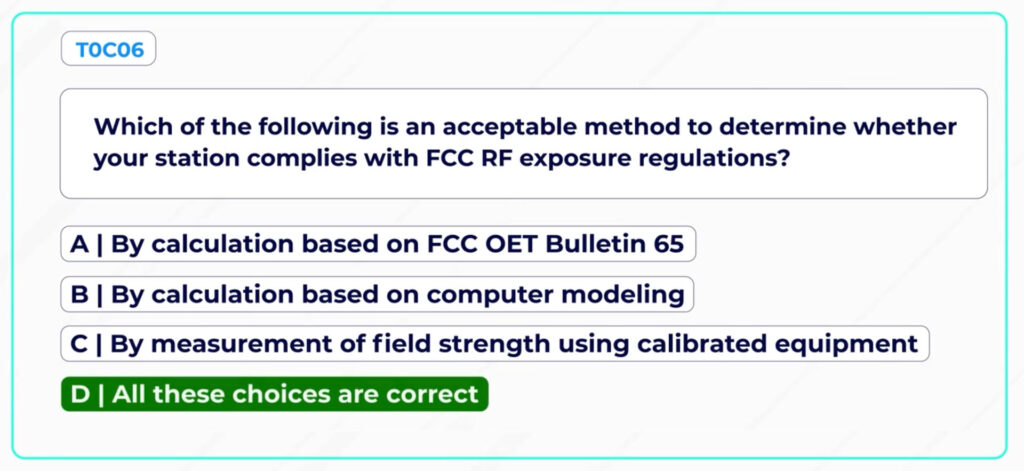
All of these choices are correct to determine whether your station complies.
And finally, compliance isn’t a one-time thing. Anytime you change your station – new antenna, new power level, new setup – you need to re-assess. The best practice is by re-evaluating the station whenever an item in the transmitter or antenna system is changed.
Lesson Recap
Let’s recap.
- In this lesson, you learned that RF radiation created by ham radio antennas is non-ionizing radiation, which means it does not have enough energy to damage DNA directly
- However, touching an antenna while transmitting can cause an RF burn, and RF exposure can heat body tissue depending on frequency and power level, distance from the antenna, and the radiation pattern of the antenna
- The body absorbs more RF energy at some frequencies than others, which is why 50 MHz has the lowest maximum permissible exposure
- Duty cycle is the percentage of time that a transmitter is transmitting. Cutting the duty cycle in half increases the allowable power density by a factor of 2
- And finally, the station licensee is responsible for following the rules for RF exposure, and you should re-evaluate your station when the transmitter or antenna is changed.