Power Line Safety
This might be the most important safety lesson you’ll ever learn in ham radio. Always, always, ALWAYS avoid overhead power lines.
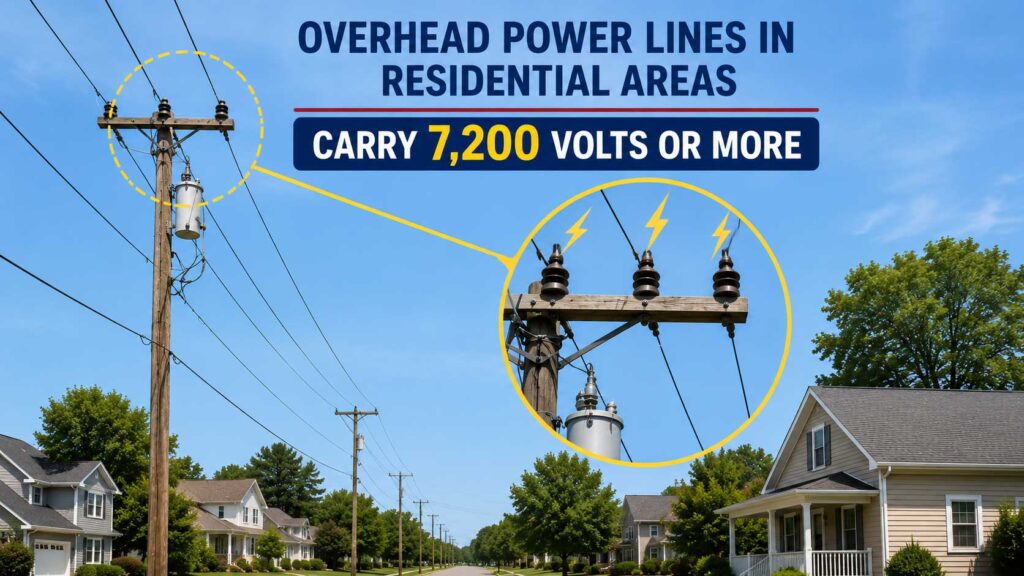
Overhead power lines in residential areas carry 7,200 volts or more, and if you, your antenna, or other equipment makes contact with an overhead power line, it could be instantly fatal. Sadly, several ham radio operators have died after tragic accidents with power lines.
If you’re watching the video, you’ve seen an extremely close call one operator shared with us. As he extended the mast of his vertical antenna sitting on a mesh ground plane, he accidentally made contact with overhead power lines that he did not see. The high voltage caused a massive shock of energy and current through his antenna. Thankfully, in this case, the operator survived this dangerous close call.
The good news is that this risk is easily avoidable with some basic precautions. First, always look overhead and locate any power lines.
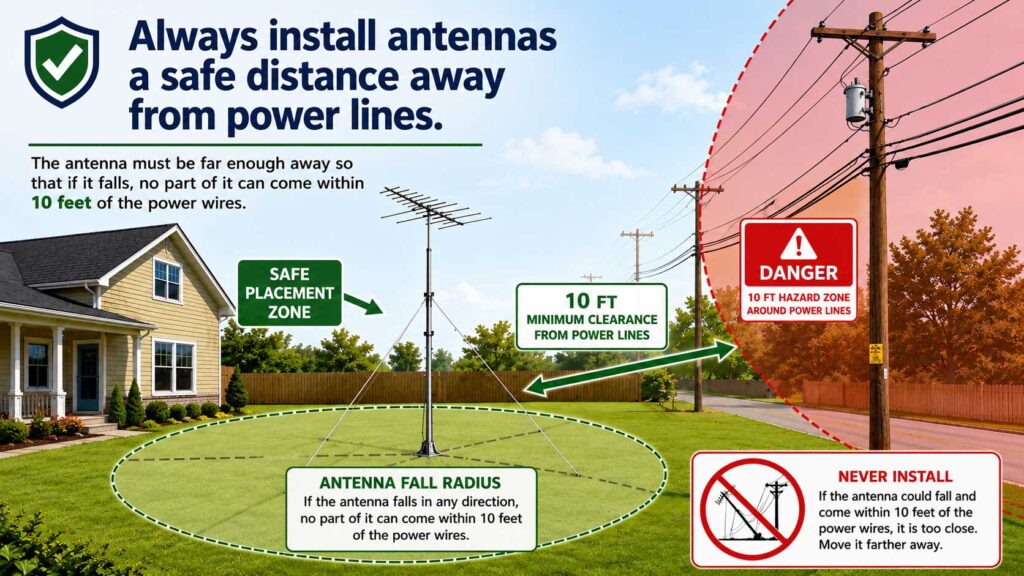
Then, when installing an antenna, always install a safe distance away from any power lines.
The minimum safe distance from a power line to allow when installing an antenna is enough so that if the antenna falls, no part of it can come within 10 feet of the power wires.
You should obviously always avoid attaching an antenna to a utility pole, because the antenna could contact high-voltage power lines.
The same precautions apply when putting an antenna on a tower. Look for and stay clear of any overhead electrical wires.
Tower Lightning Protection & Grounding
Speaking of towers, let’s discuss more about tower safety.
Ham radio towers are structures used to elevate antennas. They provide higher elevation for better performance and a solid structure to mount antennas, especially larger ones.
Because towers are tall metal structures, you must take proper precautions for lightning protection.
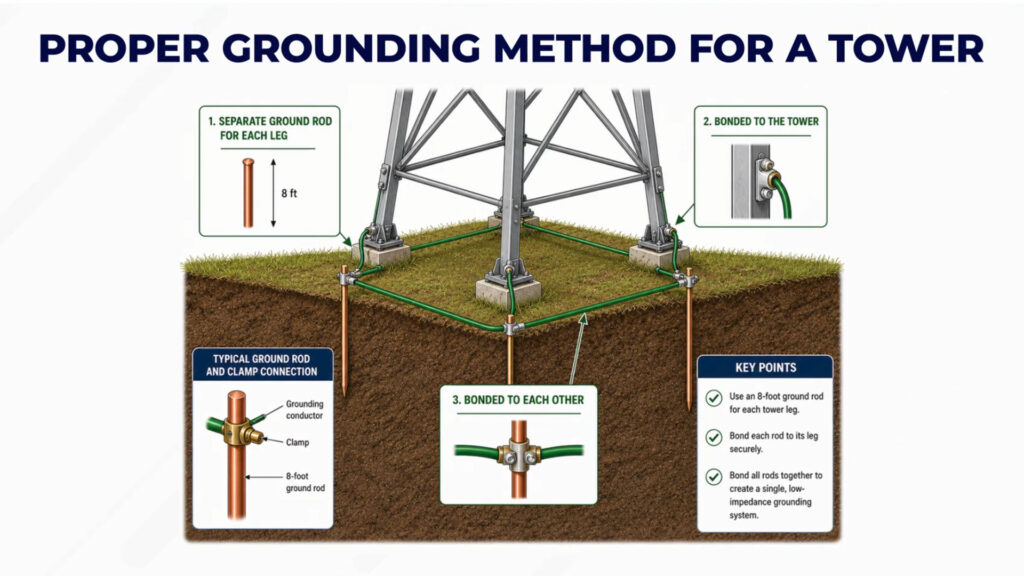
A proper grounding method for a tower is separate eight-foot ground rods for each tower leg, bonded to the tower and each other.
When installing ground wires for lightning protection, ensure that connections are short and direct. This provides the safest path of least resistance for lightning.
When routing grounding conductors, avoid sharp bends. Lightning doesn’t like to turn corners, so sharp bends must be avoided.
Also, grounding requirements aren’t just suggestions – they’re defined by local electrical codes, which you should always follow. It’s local electrical codes – not the FCC rules, FAA tower regulations, or UL recommended practices – that establish grounding requirements.
Tower Climbing
Installing antennas on towers often requires tower climbing. This is not something to take lightly.
Safe climbing requires sufficient training on safe tower climbing techniques, always wearing an approved harness, and being tied off to the tower at all times. All of these choices are correct when it comes to climbing requirements.
And very importantly – never climb alone. It is never safe to climb a tower without a helper or observer.
Guy Lines
Some ham radio towers use guy lines, which are tensioned wires that help support the tower.
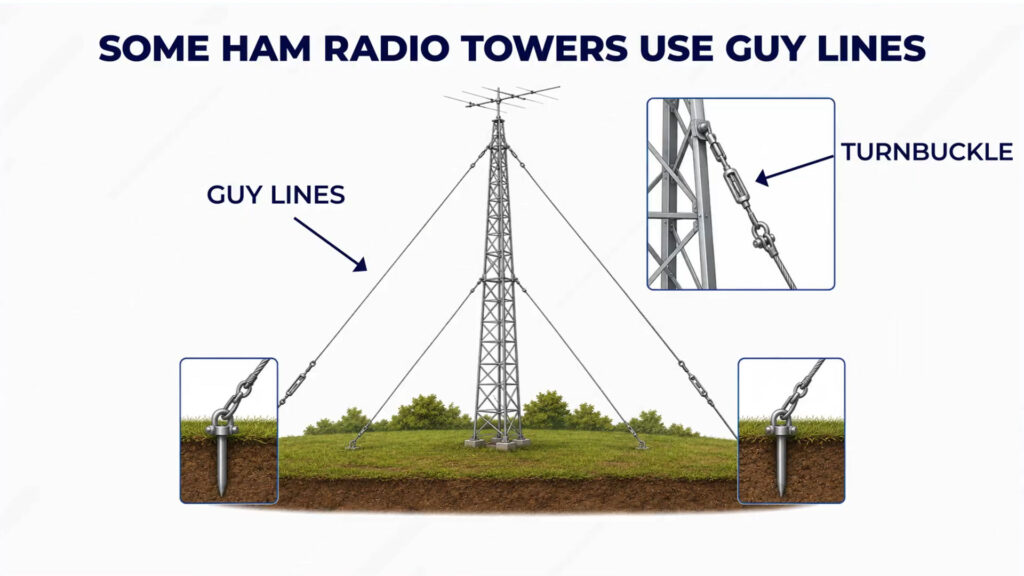
A device called a turnbuckle is used to tension the guy lines. The turnbuckles have a safety wire whose purpose is to prevent loosening of the turnbuckle from vibration.
Crank Up Tower Safety
A crank-up ham radio tower is a tower that can be raised or lowered using a winch system.
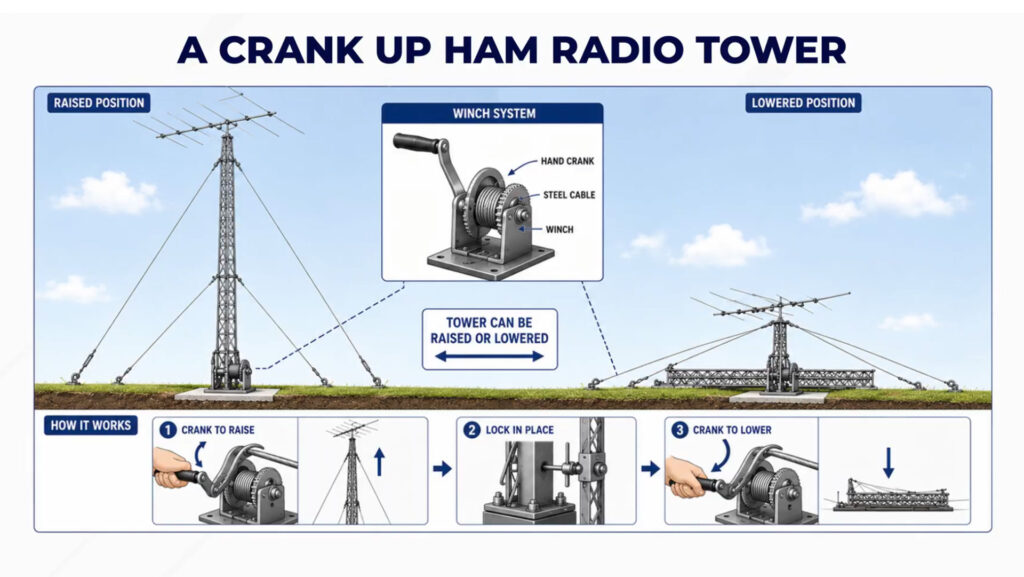
An important safety rule to remember when using a crank-up tower is that this type of tower must not be climbed unless it is retracted, or mechanical safety locking devices have been installed.
Lesson Recap
Let’s recap.
- Always, always, always avoid overhead power lines, which can be deadly
- Your antenna should be installed so that if your antenna falls, no part of it can come within 10 feet of the power wires
- Ham radio towers should always be grounded with separate eight-foot ground rods for each tower leg, bonded to the tower and each other
- Lightning doesn’t like to turn corners, so sharp bends must be avoided
- Always follow local electrical codes
- Safe climbing on towers requires sufficient training, always wearing a harness, and being tied off to the tower at all times
- It is never safe to climb a tower without a helper
- And finally, do not climb a crank-up tower unless it is retracted or has a mechanical safety locking device in place.