Electrical Safety
It’s time to talk about something that really matters – safety.
Electricity is incredibly useful, but it can also be dangerous if you don’t respect it.
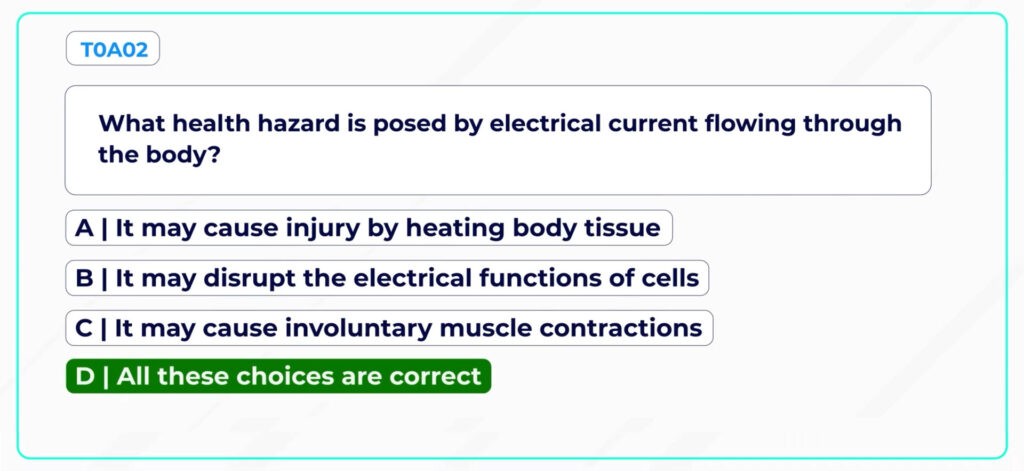
When electrical current flows through your body, it can do several things. It may cause injury by heating body tissue, disrupt the electrical function of cells, and even cause your muscles to contract uncontrollably. All of these choices are correct when describing the hazards of electrical current.
Fuses
One of the simplest safety devices you need for your station is a fuse. Fuses used in ham radio serve the same purpose as the ones used in the electrical panel in your home.
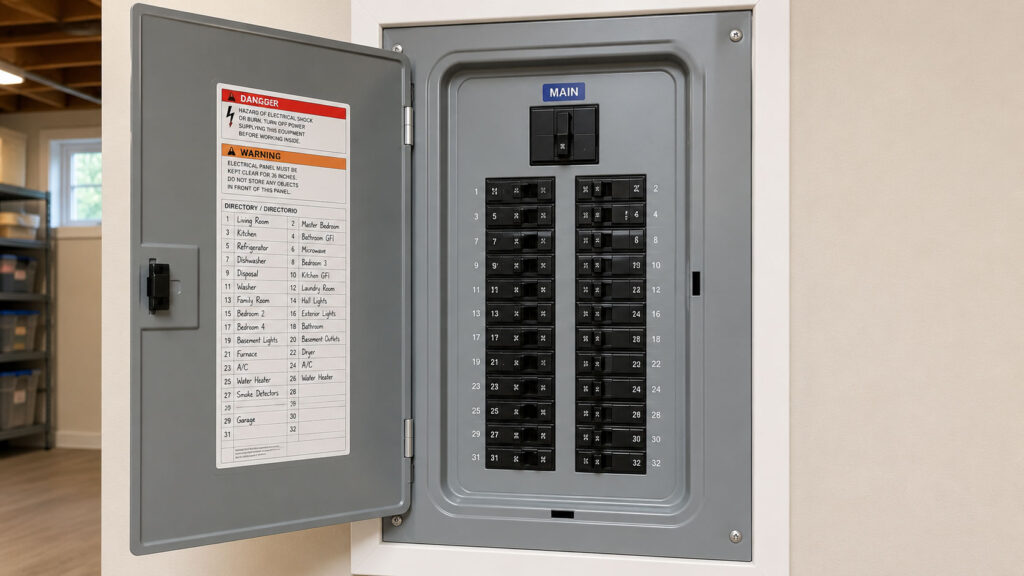
A fuse is there for one main reason: to remove power in case of an overload.
Fuses are rated in amps. If more current flows than the fuse’s rated amperage, the fuse blows, cutting the connection and protecting your equipment, and more importantly, preventing dangerous situations.
For example, if a fuse is rated for 5 amps, it will allow less than 5 amps of current to pass, but anything higher will blow the fuse and stop current from flowing.
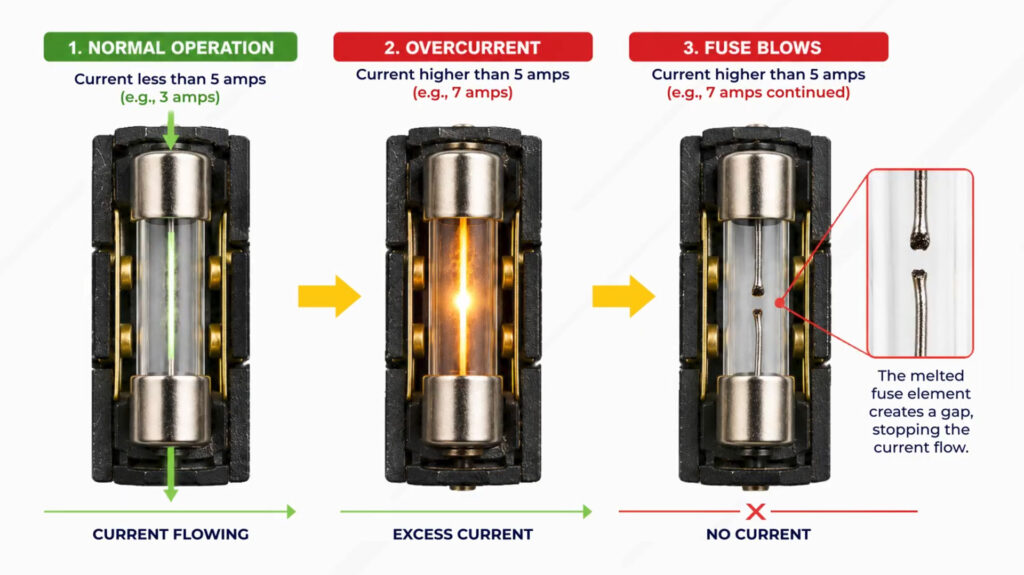
And this is critical — never replace a fuse with one rated for a higher current. For example, swapping a 5-amp fuse for a 20-amp fuse is dangerous because excessive current could cause a fire.
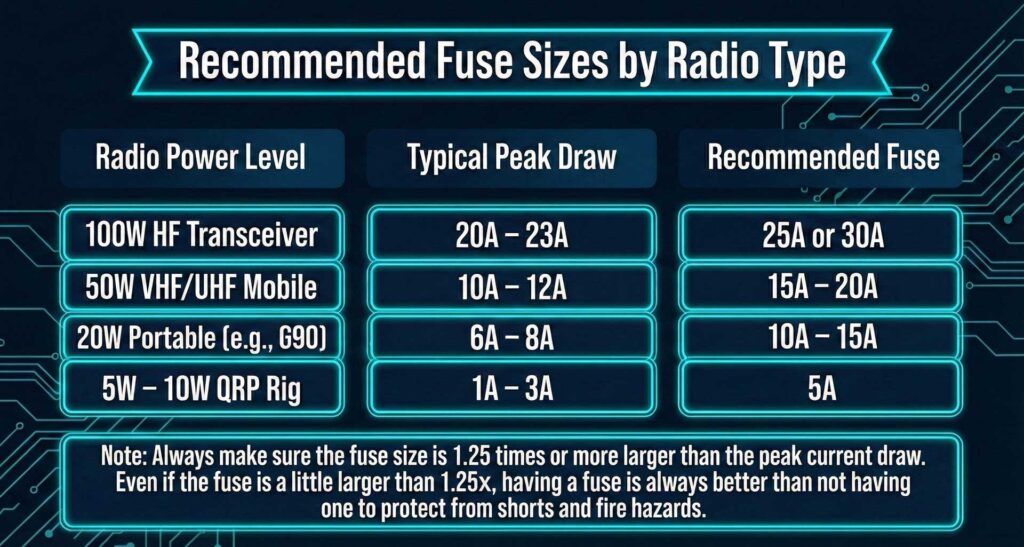
Fuses should be used in all ham radio stations, both when using batteries and when using power supplies.
Battery Hazards
In ham radio, most equipment is designed to use 12V DC power, and we commonly use 12V batteries such as LifePO4 batteries to power equipment. The actual ideal voltage for most ham radio base radios is 13.8V, but this falls into the same category as 12V batteries.
The biggest risk with a battery is NOT electrical shock. 12V is not enough voltage to push current through your body.
The biggest risk with batteries is actually extreme heat or fire caused by a short circuit or overheating.
Some batteries have internal protection circuitry, but in a battery that lacks internal protection circuitry, shorting the terminals can cause burns, fire, or an explosion.
That’s why you should ALWAYS use fuses close to the battery terminal to prevent a short circuit from causing a fire or explosion.
With lead-acid batteries, there is another safety risk you should know. Charging lead-acid batteries too rapidly can cause the electrolyte to break down into hydrogen and oxygen, causing a buildup of gases that can rupture or explode the battery. This is called-out gassing.
When the exam asks which hazard exists when rapidly charging or discharging an unprotected battery, the answer is overheating or out-gassing.
AC Power Safety
Let’s discuss safety when using 120V AC power, the standard home power in the United States and much of the world.
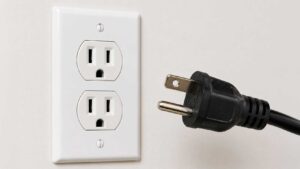
120V AC is enough to pose a dangerous or even deadly electrical shock hazard, and you must take proper precautions.
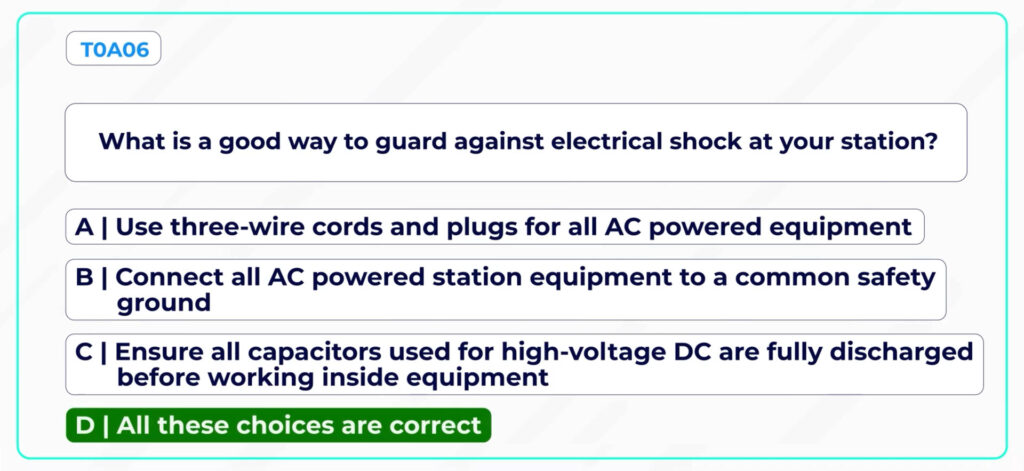
There are several best practices to guard against electrical shock:
- Use three-wire cords and plugs for all AC-powered equipment
- Connect all AC-powered station equipment to a common safety ground
- And ensure all capacitors for high-voltage DC are fully discharged before working inside equipment.
All of these choices are correct when it comes to preventing electrical shock.
Understanding wiring is also important. In a standard three-wire 120V AC system in the United States, the black wire is the hot conductor – meaning it carries the voltage.
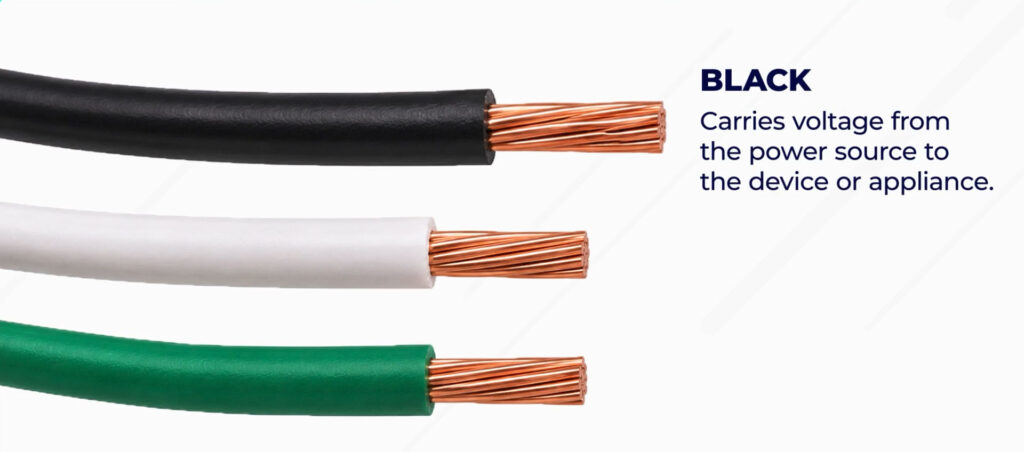
Black = hot.
And when you’re installing protection like a fuse or circuit breaker, it must go in series with the hot conductor only. That way if it trips, it actually cuts off the dangerous voltage.
- Fuses should never be connected in parallel, because it gives the current another path and will not work properly
- Adding a fuse on the neutral wire is dangerous and often illegal in standard wiring, because if the neutral fuse blows, the device will turn off, but the hot wire is still connected. So when you go to fix the device, you could receive a deadly shock.
Since ham radios require 12 to 13.8V DC to operate, we often use a power supply to convert 120V AC to 13.8V DC for the radio.
You should know that power supplies contain filter capacitors used to smooth out the DC voltage. These capacitors act like temporary storage tanks for electricity, and even when you turn the power supply off, the charge stored in filter capacitors is still a hazard.
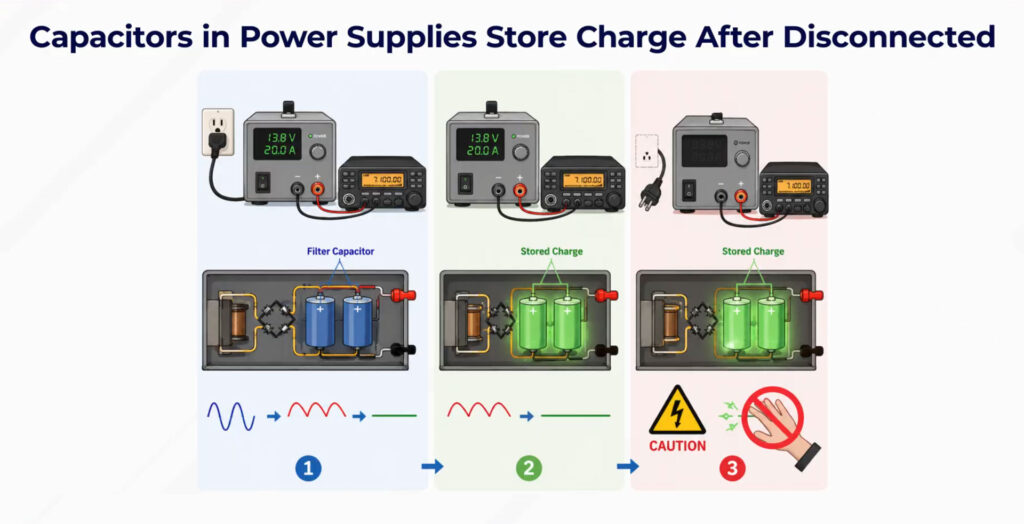
When handling a power supply that was recently disconnected, use caution and be aware that there may still be charge stored in the internal capacitors.
Lightning Protection
Installing antennas outdoors is a great way to extend your range and capabilities, like the dual-band 2m / 70cm antenna I have installed on my roof.
But when installing antennas outdoors, you must consider lightning protection.
Permanent outdoor antenna systems should have a ground rod. Your home also likely has its own ground rod.
All of your grounding systems – ground rods and earth connections – should be tied together to keep them at the same electrical potential. In other words, you should bond them together with heavy wire or conductive strap. This is called bonding, and it prevents dangerous differences in voltage between grounding points.
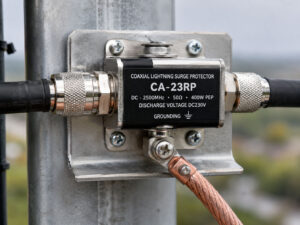
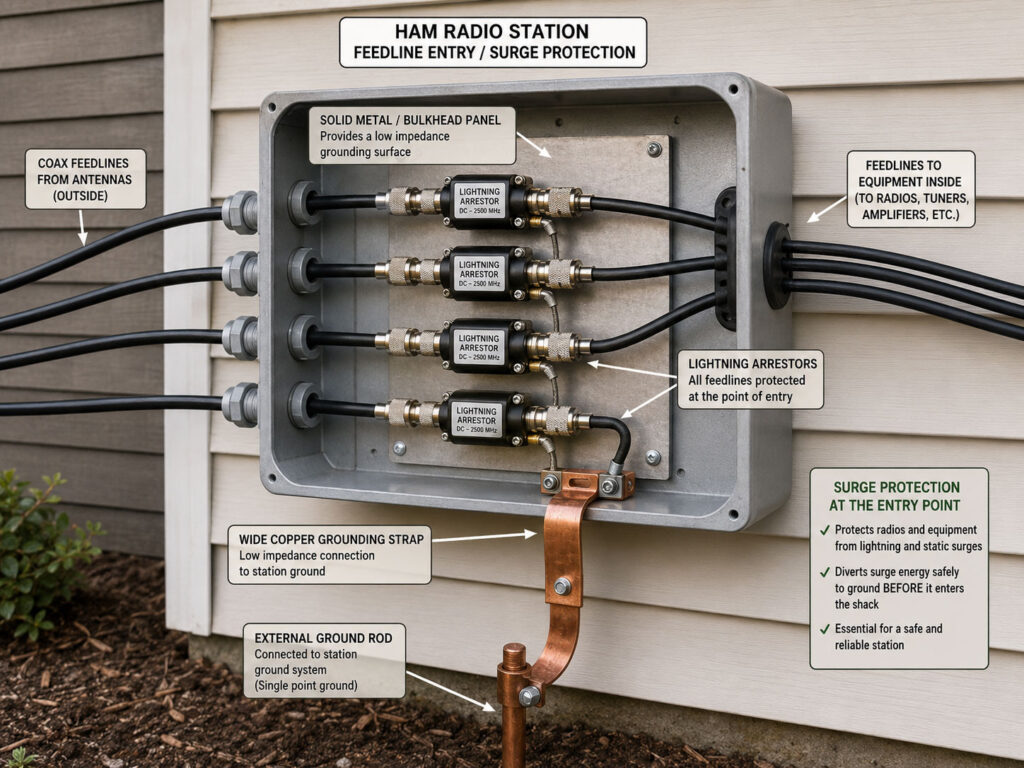
Another important way to protect your station from lightning is by using lightning arrestors. Lightning arrestors are small devices installed in line with your coaxial cable that act as surge protectors and provide a path to ground if lightning strikes your antenna system.
A lightning arrestor should be installed on a grounded panel near where the feed lines enter the building.
Voltmeter Safety
When measuring voltage – especially high voltage – you need to make sure your tools are rated for the job.
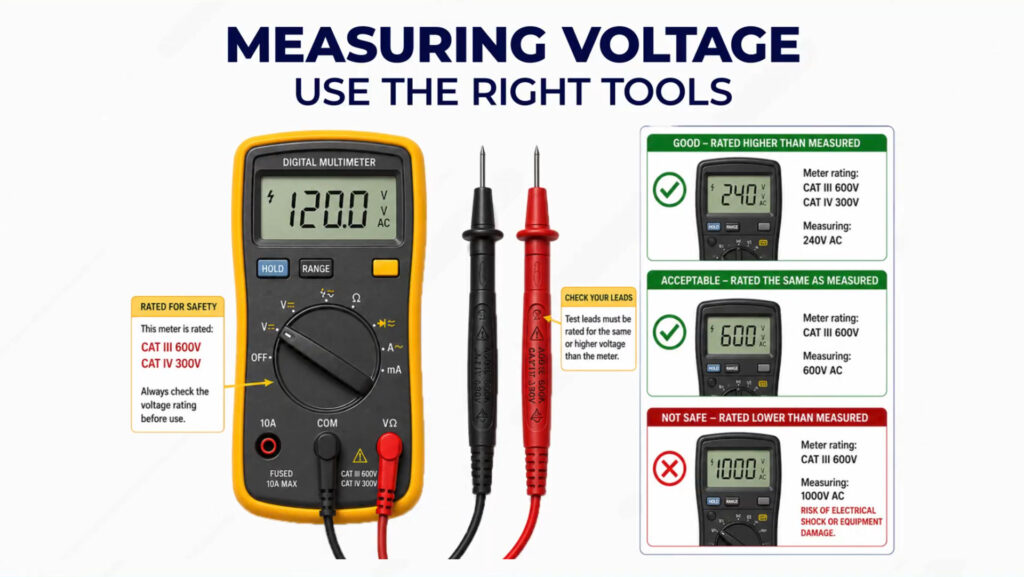
Always ensure that the voltmeter and its leads are rated for use at the voltages being measured.
Lesson Recap
Let’s recap.
- In this lesson, you learned that electrical current is dangerous and can heat body tissue, disrupt the electrical function of cells, or even cause your muscles to contract uncontrollably
- You should always use fuses to remove power in case of an overload, and swapping a 5-amp fuse for a 20-amp fuse is dangerous because excessive current could cause a fire
- We discussed how 12V batteries do not pose a shock hazard, but shorting the terminals can cause burns, fire, or an explosion
- You learned that 120V AC poses a shock hazard, and you should use best practices like using three-wire cords, connecting to a common safety ground, and ensuring capacitors are discharged
- Remember, the black wire is the hot conductor in 120V AC systems
- Outdoor grounding systems should always be bonded together, and lightning arrestors should be placed on a grounded panel where feedlines enter the building
- Finally, always ensure that the voltmeter and its leads are rated for use at the voltages being measured