We’ve talked a lot about radios and antennas – it’s time to talk about the cables that connect them together.
Cables
The most common cable for amateur radio antenna systems is coaxial cable, because it is easy to use and requires few special installation considerations.
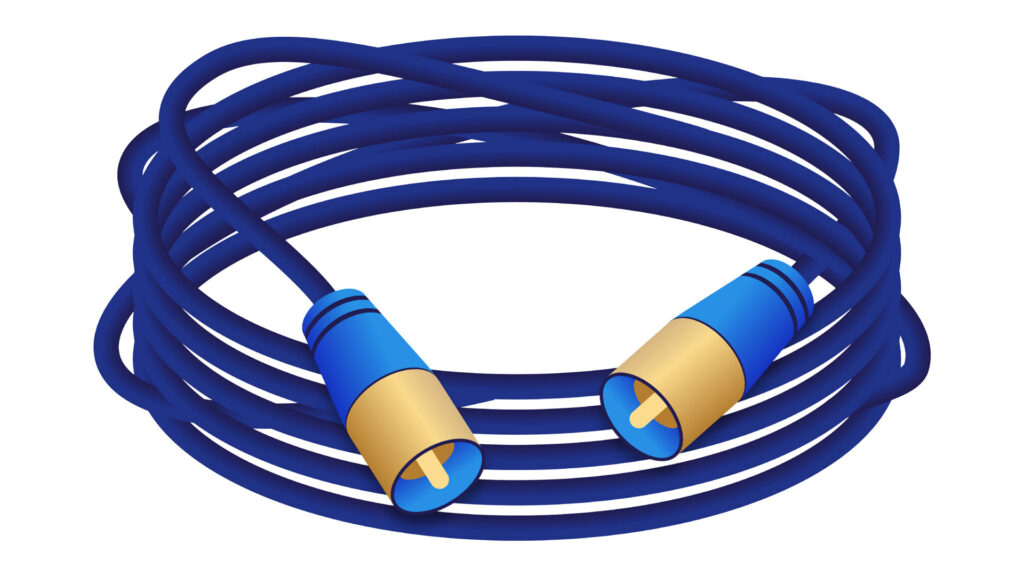
While there are various types of COAX cable, with different thicknesses and attributes, they typically share a common impedance of 50 ohms.
50 ohms is the most common impedance of coaxial cables. This standard was chosen as the right balance between power handling and low signal loss. Now, nearly all ham radio equipment is designed to match the 50-ohm standard.
COAX Connectors
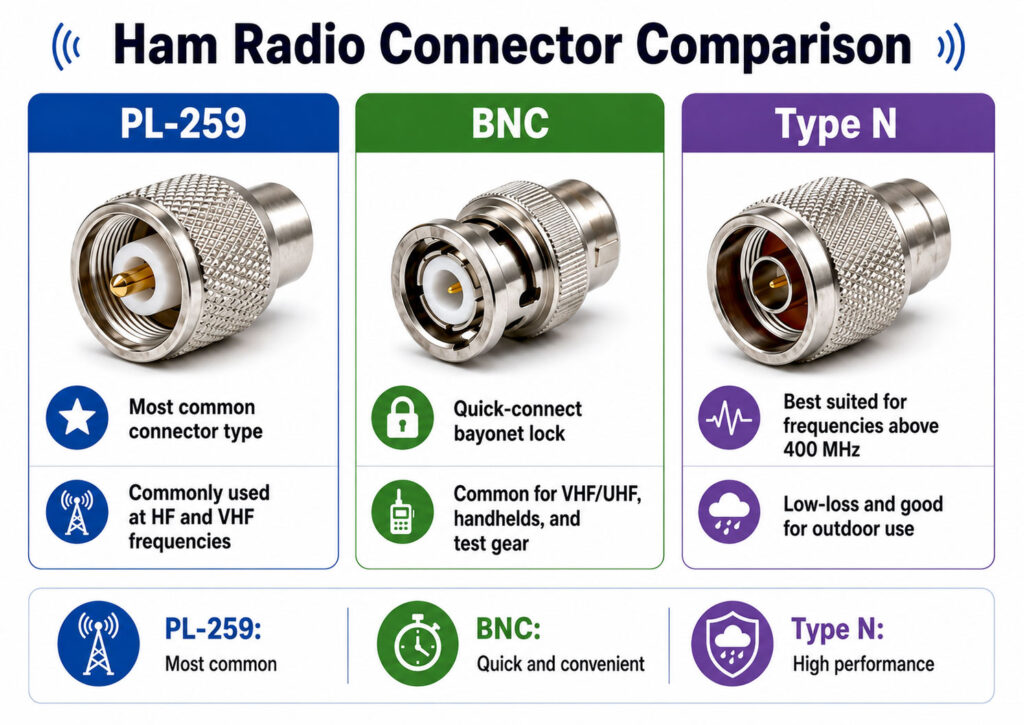
There are several common types of COAX connectors, including PL-259, BNC, and Type N.
PL-259 is the most common type of COAX connector, and they are commonly used at HF and VHF frequencies.
As you move up into frequencies above 400 MHz in the UHF and microwave ranges, Type N connectors are the most suitable.
Type N connectors are especially designed to perform well and maintain a constant 50 ohm impedance at these ultra-high and microwave frequencies.
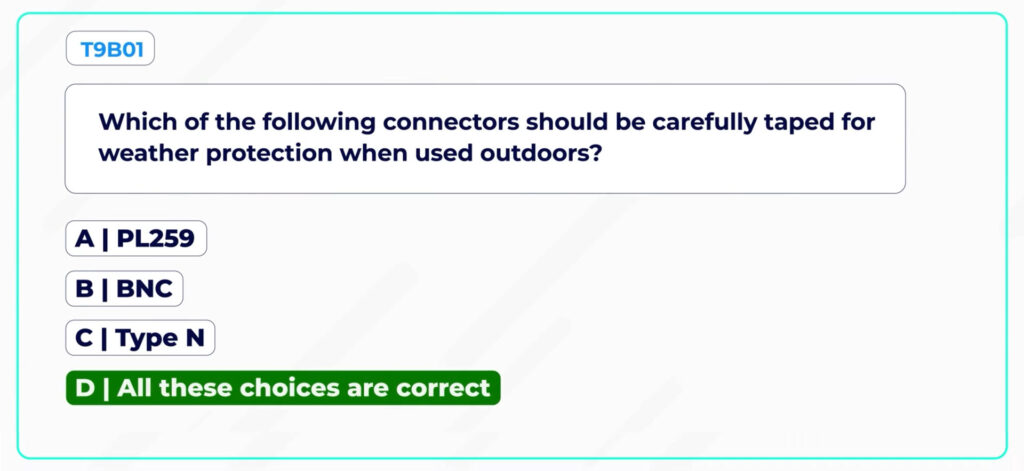
All types of COAX connectors – PL259, BNC, and Type N – should be carefully taped for weather protection when used outdoors to keep moisture out. All of these choices are correct when asked which types of connectors should be taped for weather protection.
Moisture leads to poor performance and will ruin your COAX cable if it seeps through your connectors.
You should also ensure your connectors are tight and secure. A loose connection in the antenna or feedline can cause erratic changes in SWR.
COAX Loss
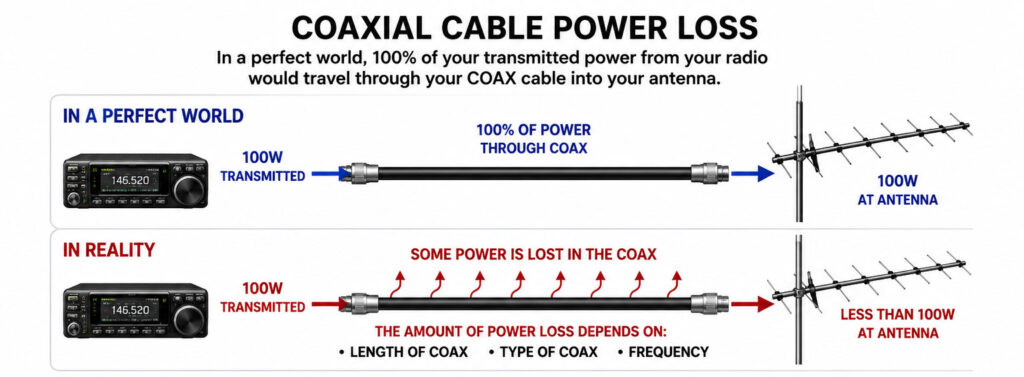
In a perfect world, 100% of your transmitted power from your radio would travel through your COAX cable into your antenna.
In reality, some power is lost in the COAX. The amount of power loss depends on the length of COAX, the type of COAX, and the frequency you’re transmitting on.
Thicker COAX generally has less loss per foot than thinner COAX. For example, RG-213 is thicker than RG-58 COAX, and RG-213 cable has less loss at a given frequency.
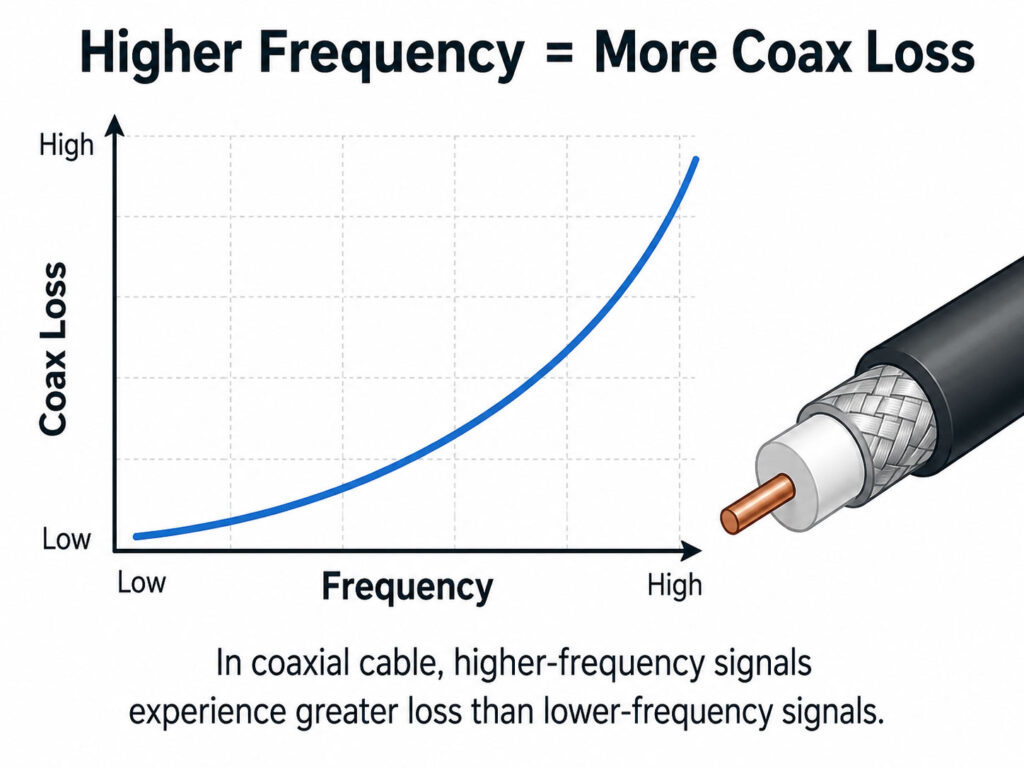
Frequency is also a factor.
As the frequency of a signal in a COAX increases, the loss increases.
This means UHF – Ultra High Frequency – signals experience more loss than HF signals over the same length of cable.
The construction of the cable also matters.
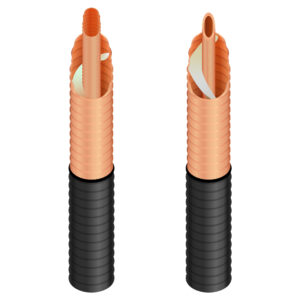
Most ham radio COAX is general-purpose flexible COAX. For very special high-performance applications and high-end stations, you can use air-insulated hardline cables, which have lower loss than flexible COAX. These cables are often known by the brand name Heliax.
Choosing the right COAX cable is a balance between cost, flexibility, and performance.
Some of the most popular COAX types used in ham radio today are RG-58, RG-8X, RG-213, and LMR-400.
For short runs, vehicle installations, or portable setups, smaller and more flexible coax may work well.
For longer runs or higher frequencies, thicker, lower-loss coax is usually the better choice. LMR-400 is a great choice for most permanent home stations.
You should also know that setup water intrusion, high SWR, and multiple connectors in line can also cause loss in COAX cables. All of these choices are correct when asked about sources of loss in COAX on the exam.
Lesson Recap
Let’s recap.
- In this lesson, you learned that a 50-ohm coaxial cable is most commonly used in ham radio because it is easy to use and requires few special installation considerations
- You learned that PL-259 connectors are commonly used at HF and VHF frequencies, and Type N connectors are used above 400 MHz.
- All connector types should be taped for weather protection when outdoors, and they should be tight and secure because a loose connection can cause erratic changes in SWR
- You learned that some power is lost in your COAX, depending on the length of coax, the type of COAX and the frequency you’re transmitting on