Basic Electrical Components
Electrical components are the building blocks of circuits that make ham radio possible.
All circuits are made up of the same basic components:
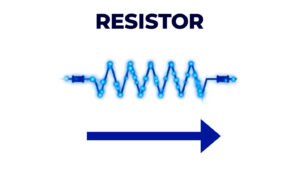
- A Resistor opposes the flow of current in a DC circuit.
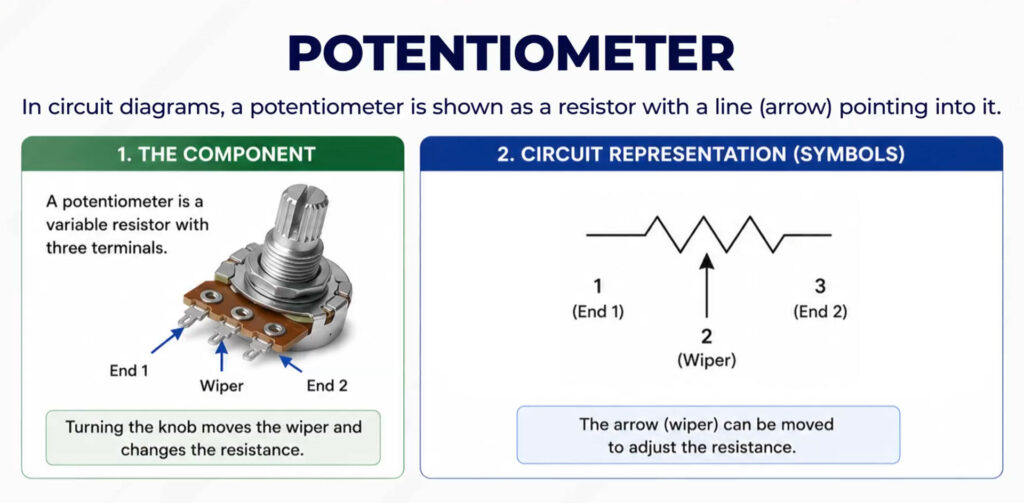
- A Potentiometer is a special kind of resistor, where resistance can be adjusted.
- A potentiometer is represented in diagrams as a resistor with a line pointing into it, indicating a resistor that can be adjusted
- Because it can be adjusted, a potentiometer is commonly used as an adjustable volume control.
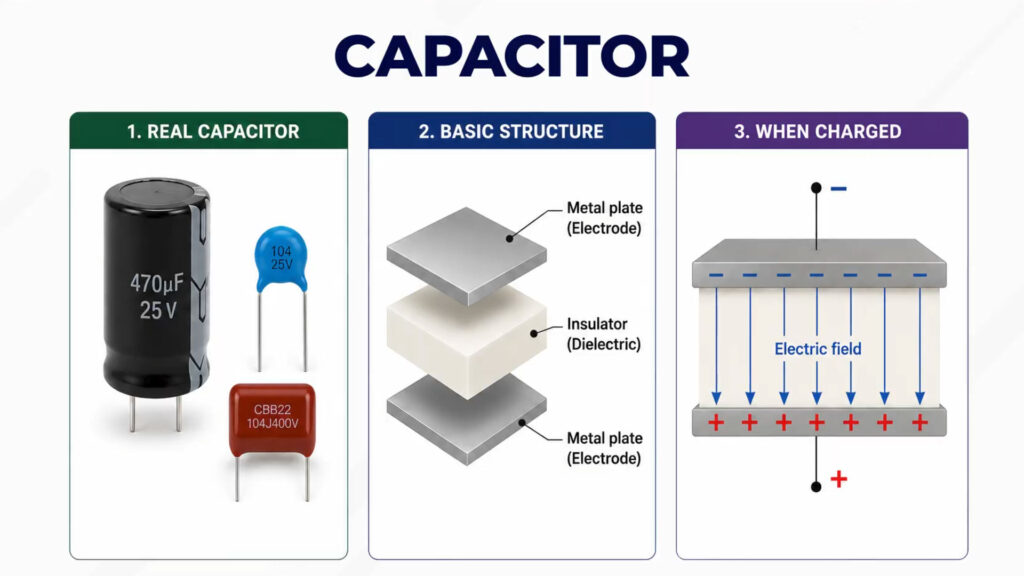
- A capacitor is an electrical component that consists of conductive surfaces separated by an insulator.
- A basic capacitor has two metal plates with an insulator separating them. When you apply a charge to the capacitor, electrons build up on one side, forming an electrical field between the two plates.
- A capacitor stores energy in an electric field.
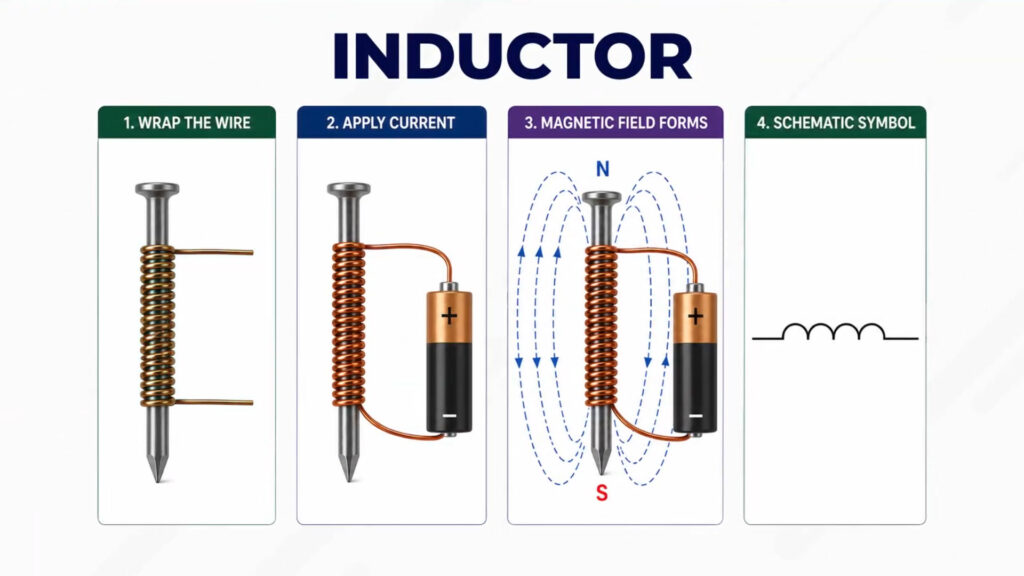
- An inductor is the counterpart to a capacitor.
- Instead of storing energy in an electric field, an inductor stores energy in a magnetic field.
- An inductor is typically constructed as a coil of wire. Imagine wrapping a wire around a nail. As current flows through the wire, it builds into a magnetic field.
- On a schematic diagram, an inductor is represented as curved lines that represent a coil of wire.
- When an inductor and a capacitor are combined, it forms a resonant circuit.
- Combining capacitors and inductors to form resonant circuits is important because they can be used to resonate at specific frequencies in various radio applications.
- An inductor and a capacitor in series or parallel are a resonant or tuned circuit.
Switches
In electronic circuits, switches turn on or off the flow of electrons through the wire by opening or closing. Light switches in your home are an example of a basic switch.
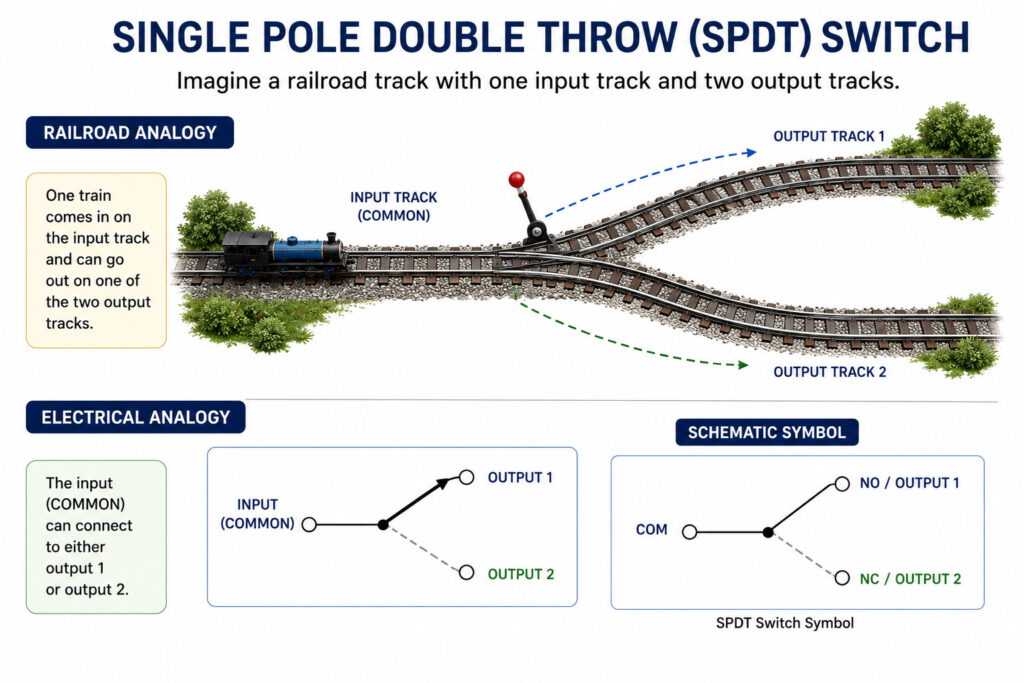
An SPDT switch stands for “Single Pole Double Throw” switch, which refers to a special type of switch where a single circuit is switched between one or two other circuits.
- Single pole means there is a single input circuit
- Double throw means there are two different output circuits or positions.
- Imagine a single-pole double-throw switch like a railroad track with one input track and two output tracks.
Another type of special switch is a relay. A relay is an electrically-controlled switch, which means instead of manually flipping the switch like a light switch, you control the switch electrically.
Diodes
A diode is an important electrical component that only allows current to flow in one direction. It’s like a one-way valve for electricity.
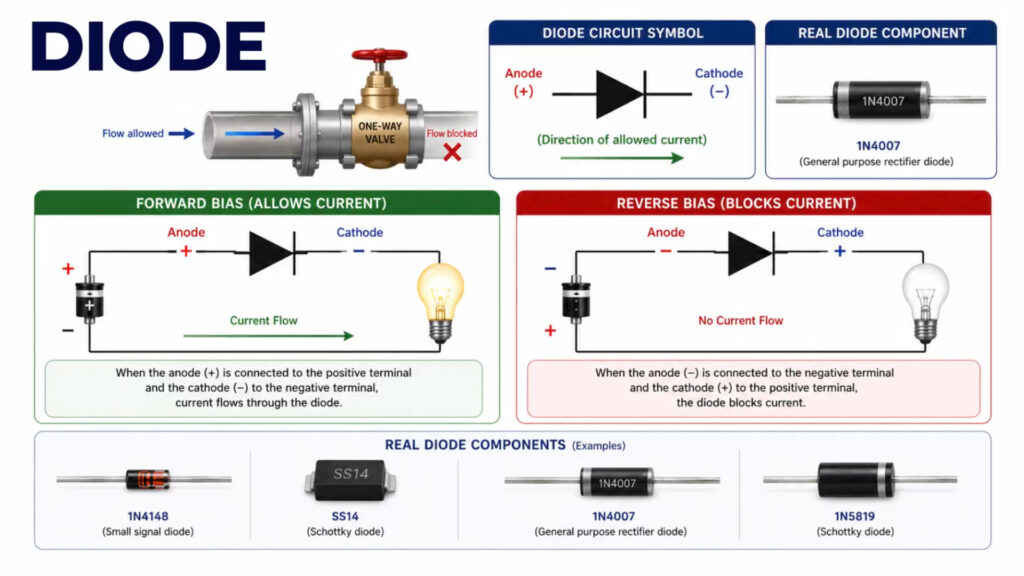
There are two sides to the diode, called electrodes, the anode and cathode.
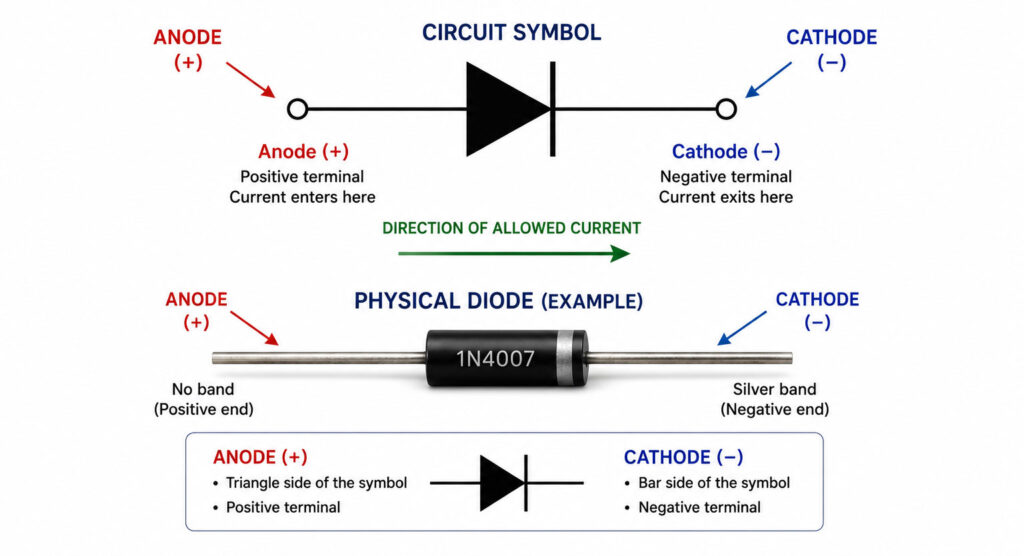
The cathode side of the diode is often marked on the package with a stripe.
Every diode has a voltage drop across when current is flowing, usually 0.7 volts, but it is lower in some diodes than in others.
Diodes have many uses in circuits, but the one you are probably most familiar with is the LED, which stands for Light Emitting Diode.
An LED is commonly used as a visual indicator.
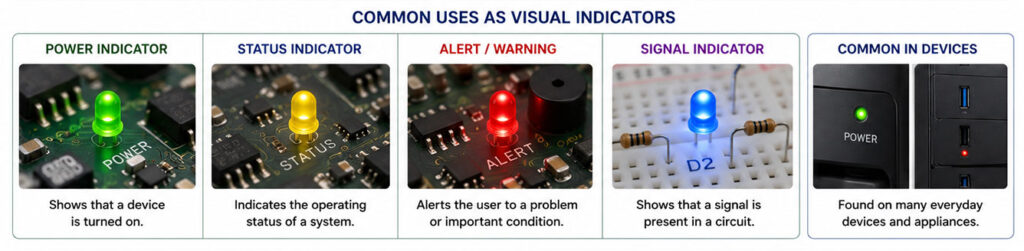
Forward current through the LED turns it on and causes it to emit light.
Transistors
The transistor is one of the most important electrical components for radio and all of modern computing. Transistors are the “brain cells” of modern electronics. In fact, the average smartphone contains billions of transistors all etched into a small piece of silicon about the size of your fingernail.
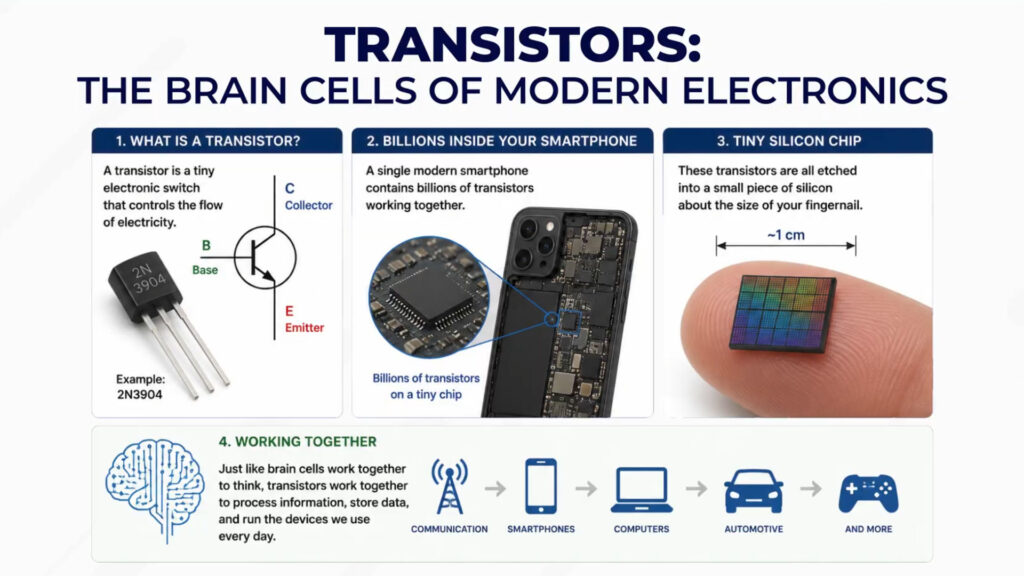
A transistor can act as both an electronic switch and an amplifier. When the exam asks which component can be used as an electronic switch, transistor is the answer.
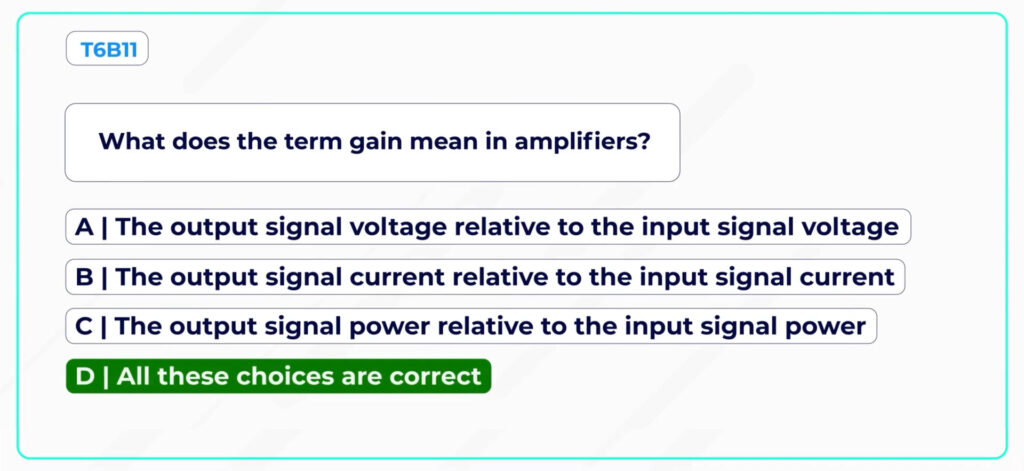
When the exam asks which component can provide power gain, transistor is also the answer, since a transistor can be used both to provide gain and as a switch.
In an amplifier, the term gain means the output relative to the input, in terms of voltage, power, or current. It doesn’t matter if you’re talking about voltage, power, or current in terms of gain for an amplifier – on the exam, all of these choices are correct.
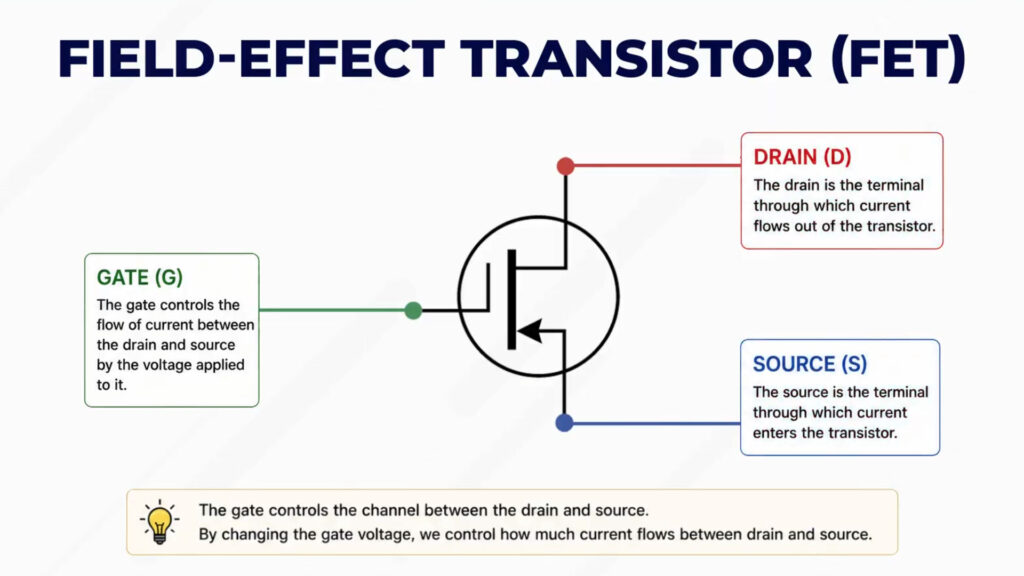
A transistor consists of three regions of semiconductor material.
The most common type of transistor today is the FET, which stands for field-effect transistor.
The three regions of a field-effect transistor are the gate, drain, and source.
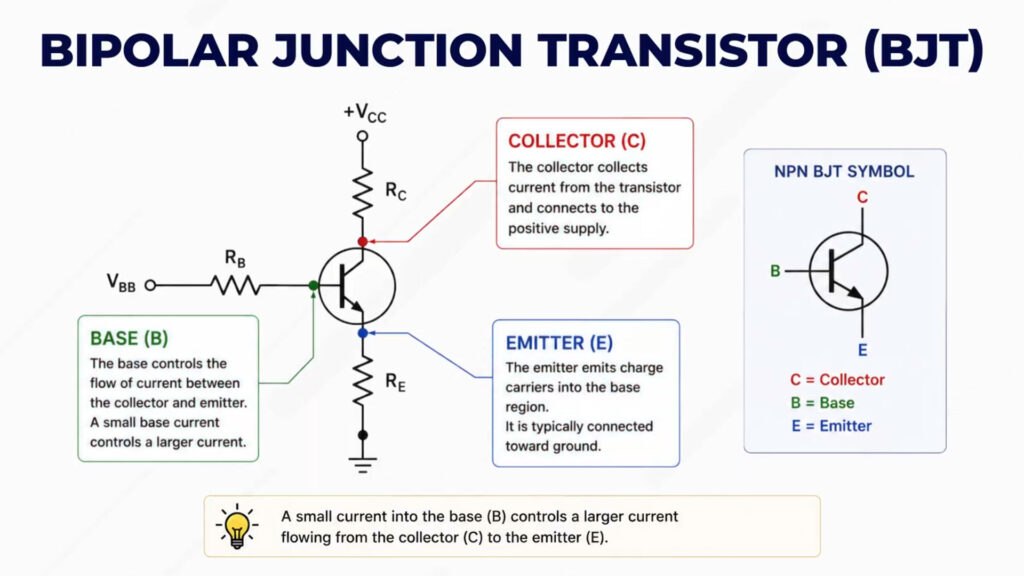
The first type of transistor to be mass-produced is called the BJT, or bipolar junction transistor. It has three regions, just like the more modern FET, but with different names.
The names of the electrodes in a bipolar junction transistor are the emitter, base, and collector.
Every individual transistor acts as a simple switch or amplifier, but when combined together in the right combination, they form the circuits that are used for all modern computing.
An integrated circuit is a device that combines several semiconductors and other components into one package, usually by printing them onto a piece of silicon.
Batteries
There are various types of batteries you can use to power circuits.
Nickel-metal hydride, Lithium-ion, and Lead-acid are three different battery types, using different chemistries, that are all rechargeable.
All of these choices are correct on the exam when asked which types of battery chemistries are rechargeable.
Carbon-zinc batteries are not rechargeable.
Lesson Recap
In this lesson, you learned the fundamental electrical components, like resistors, which resist current flow, capacitors, which store energy in an electric field, and inductors, which store energy in a magnetic field.
You learned that an inductor and a capacitor can be connected in series or parallel to form a resonant circuit, which is important for radio.
You learned that a diode is a component that only allows current to flow in one direction, from the anode to the cathode, and that an LED is a light-emitting diode.
You learned that transistors are the most critical component in all of modern electronics, that they can act as both a switch and an amplifier, and that the most common type of transistor in use today is the FET, or field-effect transistor.