Welcome to lesson 10. In this lesson, you’ll learn fundamental electrical concepts like voltage and current, AC & DC, Series and Parallel Circuits, and Conductors & Insulators.
Basic Electrical Concepts
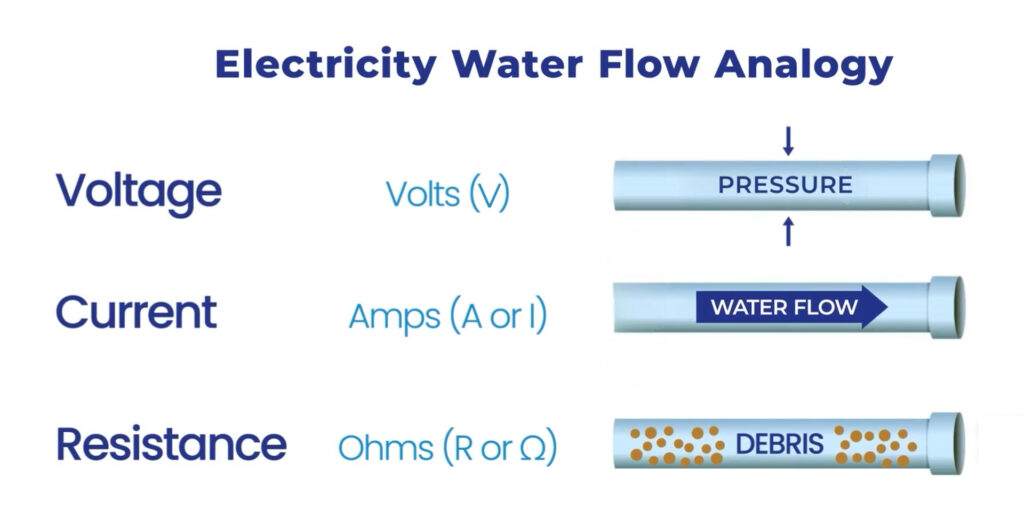
The three most important electrical properties are voltage, current, and resistance.
- Voltage is the electrical potential difference between two points, measured in volts. Think of it like the “push” or the pressure that moves electrons through the circuit. A difference in voltage causes electron flow, just like how a difference in pressure causes water flow from high pressure to low pressure.
- Current is the flow of electrons in an electrical circuit, measured in Amperes. Think of current like the flow of water through a pipe, except instead of water in a pipe, it’s a flow of electrons in a wire.
- Resistance is the property that resists current flow, measured in Ohms. Think of resistance like rocks or other obstructions that block the flow of water in the pipe.
Here are a few other electrical concepts you should be familiar with.
Power is the rate at which electrical energy is used, measured in Watts. You’ll commonly see watts when we talk about the power output of radios, such as a 5 to 8-watt handheld or a 100-watt HF ham radio.
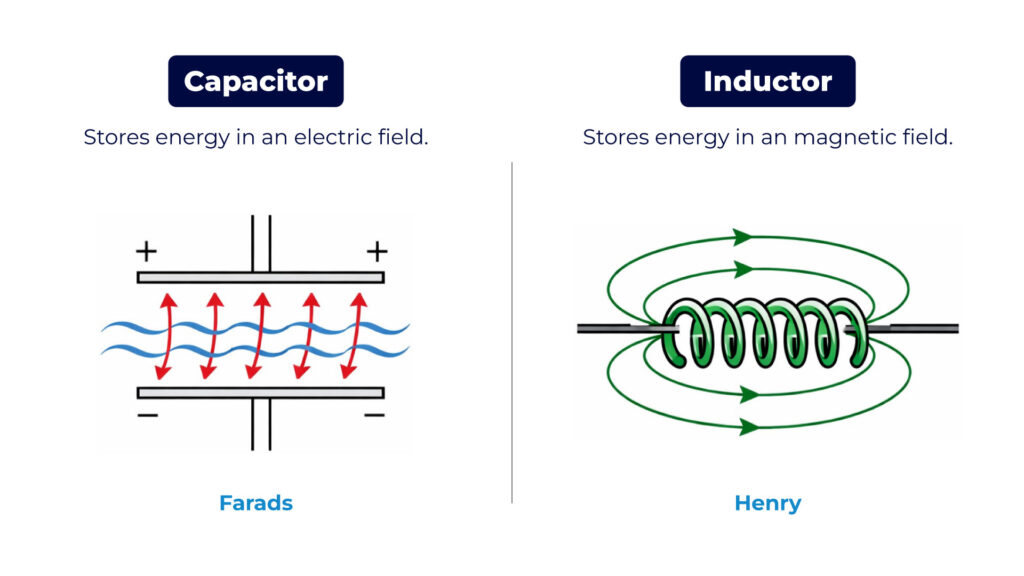
Capacitance and inductance are also important in circuits, especially radio circuits.
Capacitance is the ability to store energy in an electric field, measured in Farads.
Inductance is the ability to store energy in a magnetic field. The unit of inductance is the henry.
AC & DC
There are two main types of current: alternating current and direct current.
Alternating current is current that alternates between positive and negative directions. The standard 120V current in your home is Alternating Current, or AC current.
The frequency is the number of times per second that an alternating current makes a complete cycle, and frequency is measured in Hertz.
Frequency is the same concept used to characterize radio waves, and it also applies here to AC current when measuring the cycle speed.
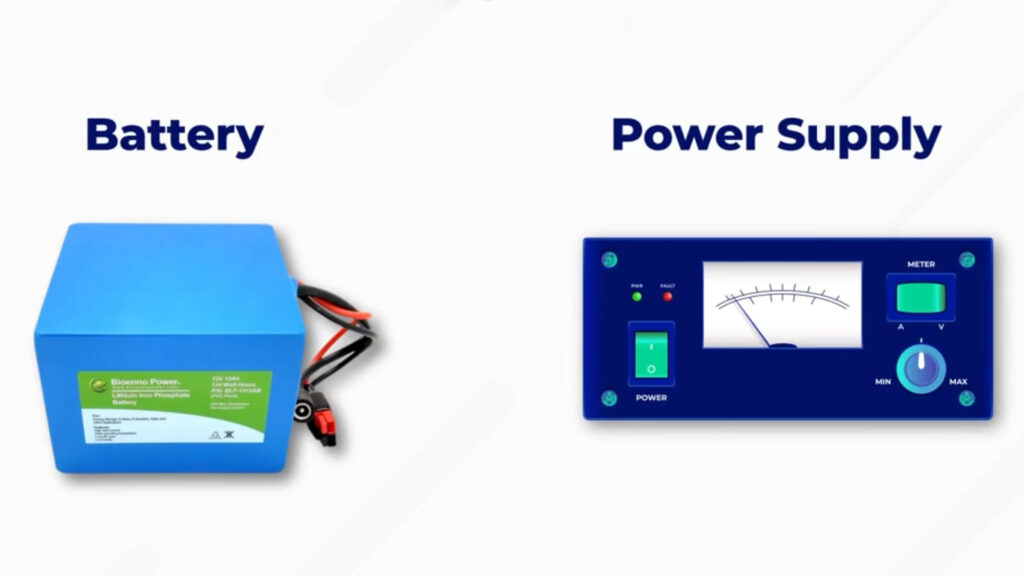
DC stands for direct current, and it is most commonly used to power radios. To get DC power for your radio, you can use a battery, or you can use a power supply to convert AC from your home outlet to DC.
Resistance & Impedance
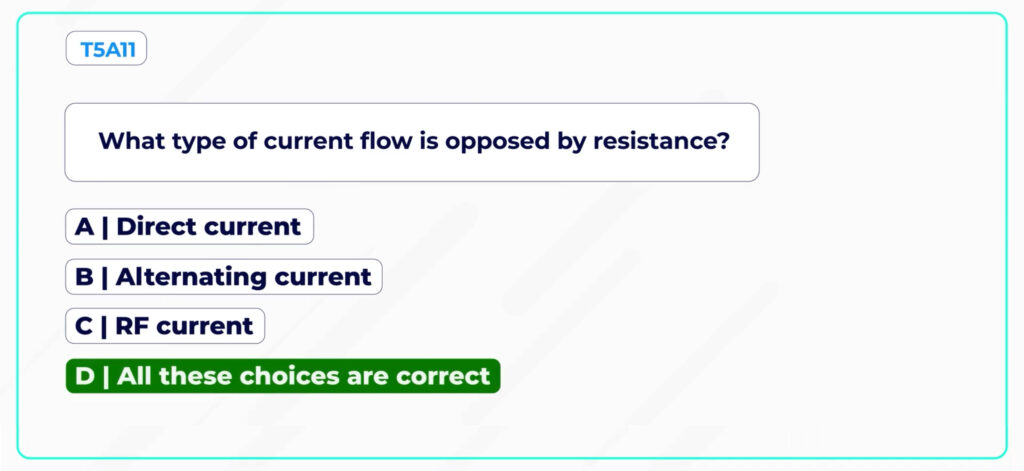
All types of current flows are opposed by resistance: direct current, alternating current, and RF current, so don’t get tricked by this question on the exam. When the exam asks what types of current flows are opposed by resistance, the answer is all of these choices are correct.
However, there is a new term for resistance in AC circuits you need to learn.
In AC circuits, we use the word impedance instead of resistance, because AC circuits also have to account for capacitors and inductors. Impedance is the opposition to AC current flow. Impedance is measured in Ohms, just like resistance.
A trick to remember this is that impedance means to impede, or block the current.
Series and Parallel Circuits
There are two ways to connect components like batteries and resistors in a circuit: in series or in parallel.
In a series circuit, the components are connected in line. There is only one path, so in a series circuit, the current is always the same through the components.
Imagine water flowing through a pipe – the same amount of current will flow through each section of the pipe if it only has one path.
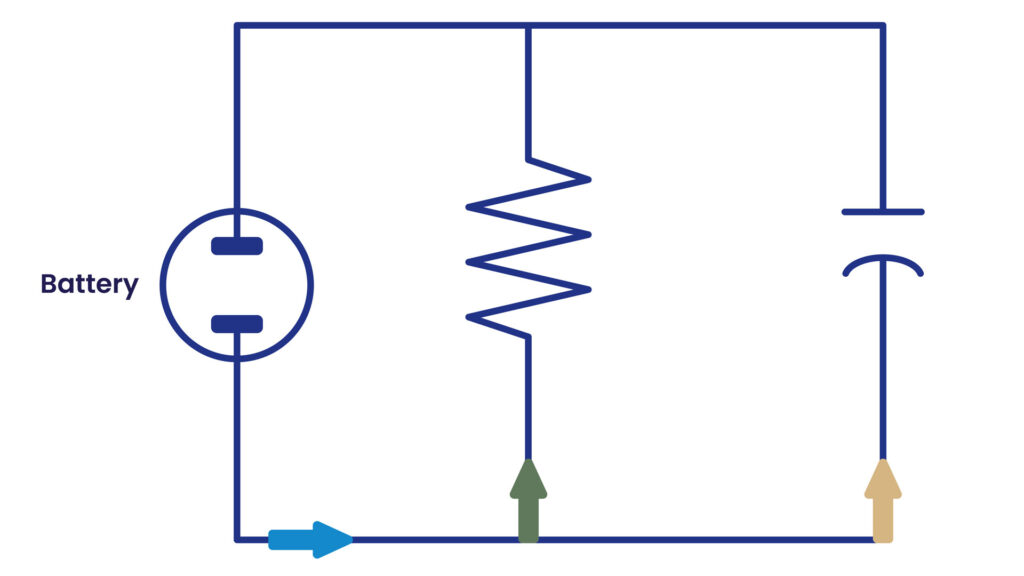
In a parallel circuit, components are connected, allowing two or more paths for current to flow. The voltage is always the same across all components in a parallel circuit.
Conductors and Insulators
Some materials are good conductors of electricity, which means they allow electrons to flow, while other materials act as insulators, preventing the flow of current.
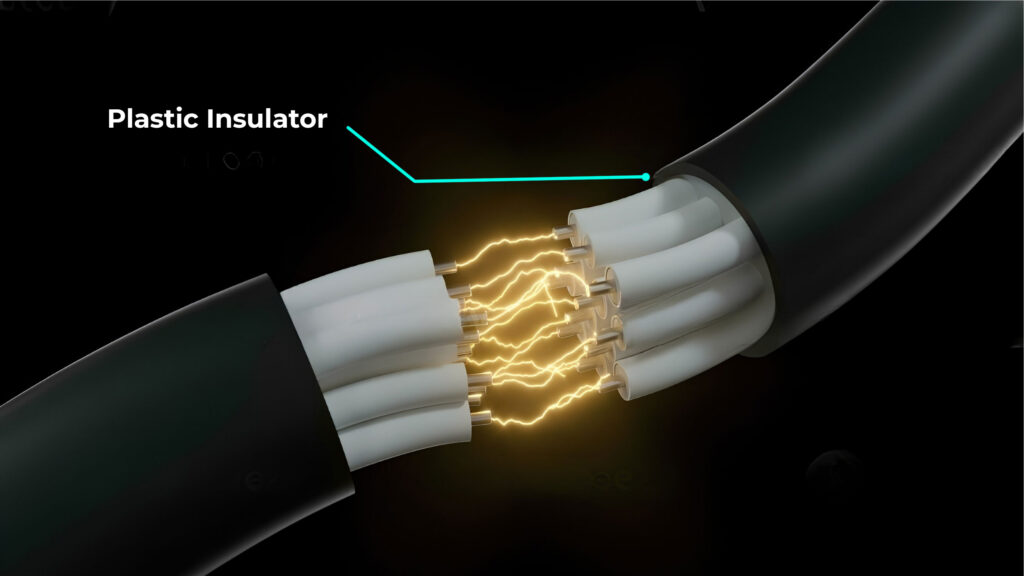
Think about your basic electrical wire – the copper wire is the conductor, where the electricity flows, and it is covered by a plastic covering that acts as the insulator to prevent electricity from flowing out of the wire.
Metals are good conductors of electricity because they have many free electrons. Copper is the most common conductor, but other metals like stainless steel and graphite are also commonly used. But it’s not just metals that are conductors.
You might be surprised to learn that seawater contains dissolved ions and can conduct electricity, which is why it is extremely dangerous to be in the ocean during a lightning storm.
Glass is a good electrical insulator that prevents electrons from flowing, and is used in many circuit boards, light bulbs, and other components.

Plastics are also commonly used as insulators, like the plastic covering used in electrical cables.