
These are the correct answers on the real FCC exam!
The FCC and Part 97
Hello and welcome to Lesson 1 of the Technician License course. In this lesson, we’ll cover basic information about getting your ham radio license and rules.
In the United States, the Federal Communications Commission, aka the FCC, is the agency that regulates and enforces amateur radio rules.
The FCC is the agency that is going to issue your amateur radio license.
 FCC Logo
According to the FCC, the “basis and purpose” of the Amateur Radio Service is advancing skills in the technical and communication phases of the radio art. The keyword here is art – amateur radio is both a practical skill and an art!
Getting Licensed and Receiving a Call Sign
The FCC currently issues three classes of license for amateur radio. They are Technician, General, and Amateur Extra. You have to pass each license in order, starting with Technician, and with each license, you get access to more frequencies and more privileges.
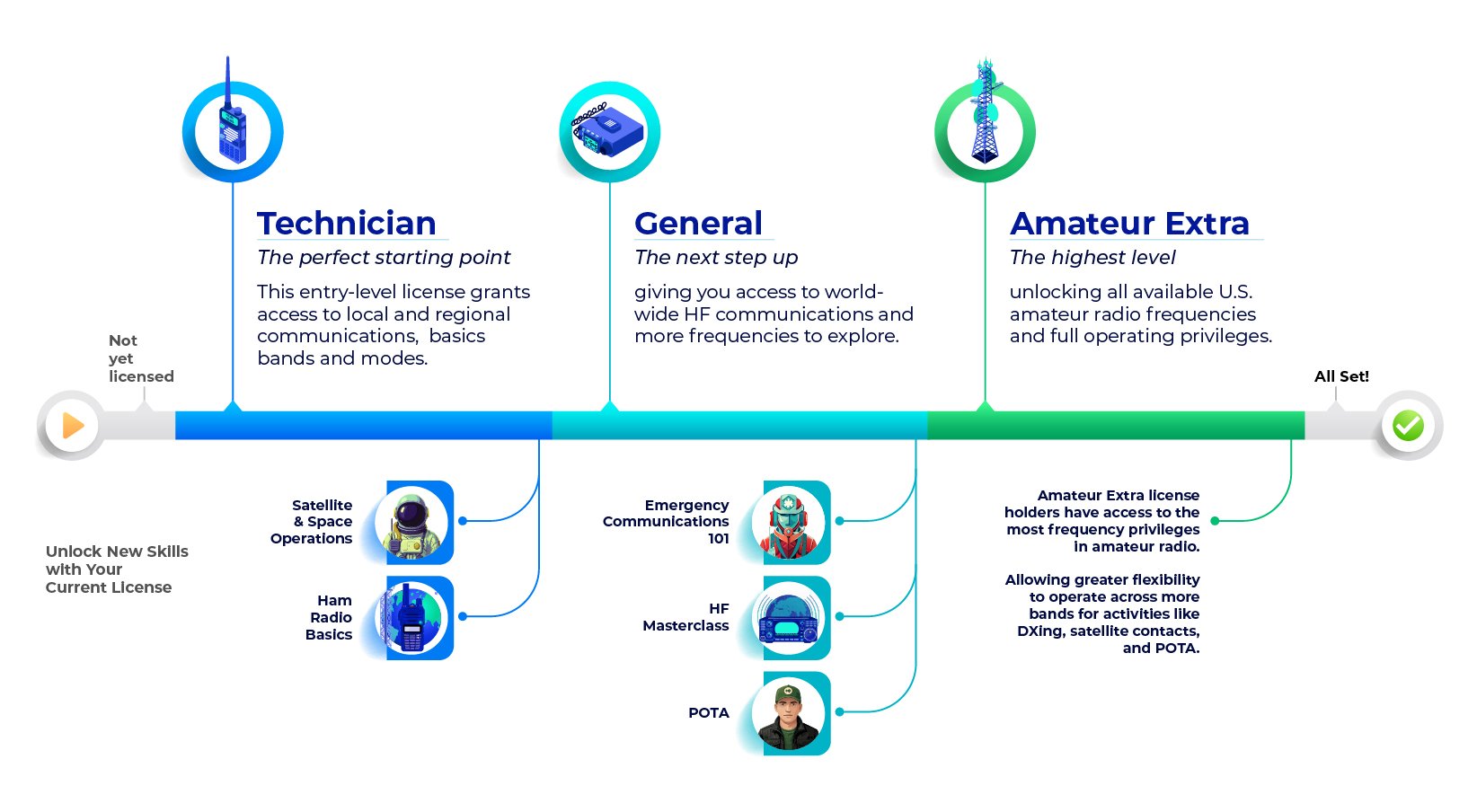
Licensing Roadmap, by Ham Radio Prep
To earn your Level 1 Technician license, you need to pass a 35-question exam with at least 74% or higher, which means you need to get at least 26 questions right.
This course will teach you all of the material on the exam with easy step-by-step lessons like this one.
The final exam will be conducted by a friendly team of Volunteer Examiners, and you can take it online or in-person.
Once you pass, you’ll get a certificate showing that you passed the exam, but wait! You can’t operate just yet. You need to wait for the FCC to process your application and put it into the database before you can start operating.
You will be legal to operate once your license appears in the FCC ULS database. ULS stands for Universal Licensing System.
You can start to transmit as soon as your operator/station license grant appears in the FCC’s license database.
The keyword to remember here is database – once your license appears in the database, you’re approved to operate.
So let’s walk through what happens after you pass the exam.
First, you’ll get an email from the FCC with a link to pay a $35 exam fee. Once you pay that, the FCC will process your application, which is really quick, usually just 1-3 days.
Then, you’ll receive official notification with your license and callsign via email from the FCC with a link to download the license grant.
That’s right – the FCC now uses email, not physical mail, as the primary way of contacting you – so it’s very important to keep your email up to date with the FCC.
So what may happen if the FCC is unable to reach you by email?
Many students incorrectly think they may get a fine and suspension of their operator’s license. But that answer is a trap! Fines are usually for a violation of rules. Revocation of access to your license record also doesn’t make sense here – they aren’t going to just remove your ability to access your records. In this case, the correct answer is revocation of the station license or suspension of the operator license.
When you get your ham radio license, you’ll also get a call sign that identifies you and your station – For example, my call sign is N0WRL.
When you pass your Technician license, you get a call sign from a pool called Group D, which consists of two by three call signs. Two by three means the callsign format is two letters, a number, and then three letters, like KF1XXX. The number in the callsign represents the region of the US where the callsign was issued.
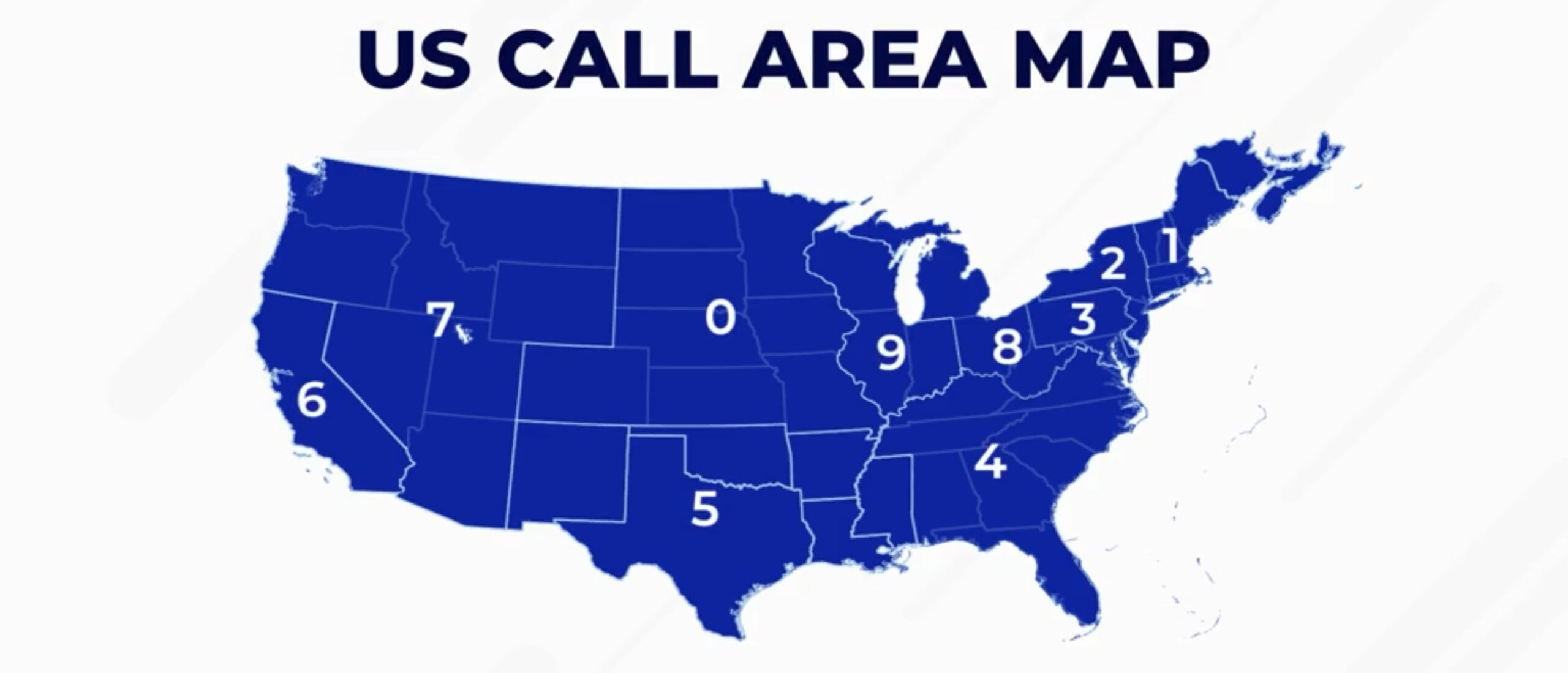
United States of America Call Area Map, by Ham Radio Prep
Shorter callsigns like 1X2 and 2X1 are only available for Amateur Extra class licensees.
Many hams keep their original call sign, but you can also choose a unique one, called a vanity call sign, just like getting a vanity license plate for your car.
My original callsign when I first got licensed was KN4NEH. A few years later, I applied for and received the vanity call sign N0WRL. Any licensed amateur can get a vanity call sign – so yes, you can get a vanity license even if you are a Technician at any time!
However, when you upgrade to General or Amateur Extra licenses, you get access to choose special, shorter call sign formats.
Your ham radio license is valid for ten years. At the end of those 10 years, you can pay a small fee to renew your license, without having to retake the exam. You can request to renew your license beginning 90 days before it expires.
Let’s say you forget to renew your license and your license expires. The FCC has a grace period of two years. If you renew your license within the two-year grace period, you can keep your license level and call sign without having to retake the exam!
But can you operate your radio if your license has expired and you’re in the grace period? No, you must wait until the license has been renewed in the database before you transmit on the amateur bands.
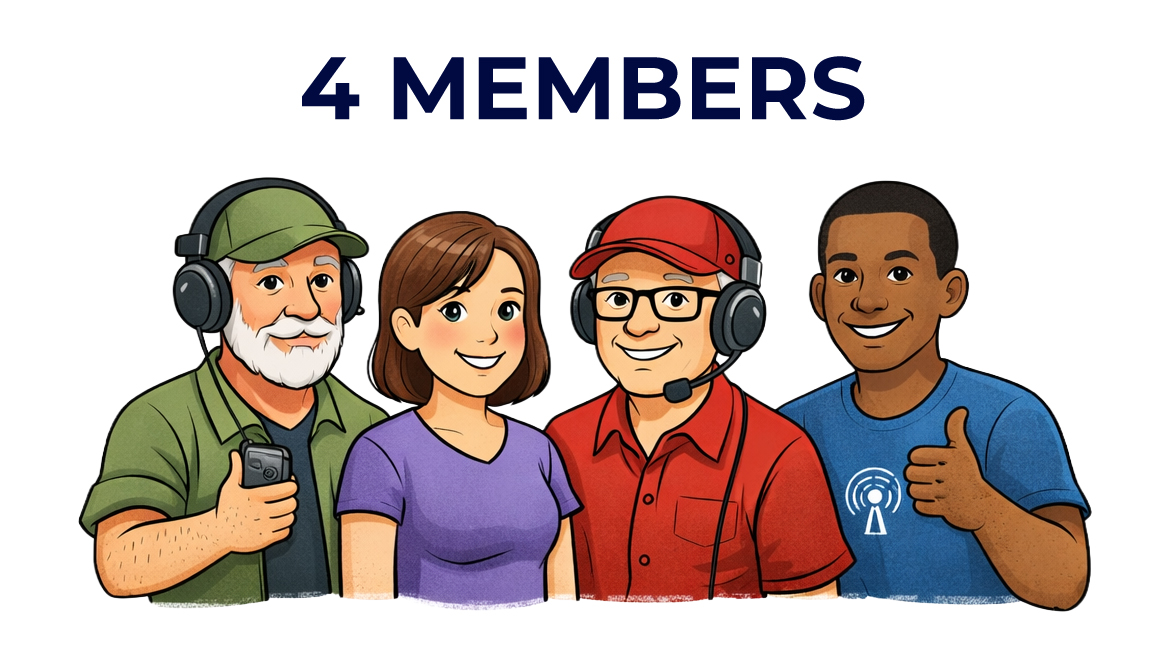
Ham radio clubs can also get their own unique license and callsigns. The only requirement is that the club must have at least four members to get its own license and call sign.
Finally, while this is a very rare occurrence, the FCC may choose to make an inspection of your station. If they do, you must make the station and related records available at any time upon request by an FCC representative.
Lesson Recap
That’s the end of lesson 1 – so let’s recap. The FCC is the government agency that is in charge of amateur radio. There are 3 levels of ham radio licenses: Technician, General, and Amateur Extra. You cannot transmit until your license is in the ULS database, and you need to keep your email up to date with the FCC. Your ham radio license is good for 10 years. You can request a renewal 90 days before it expires, and you have a two-year grace period after it expires to renew without retaking the exam.